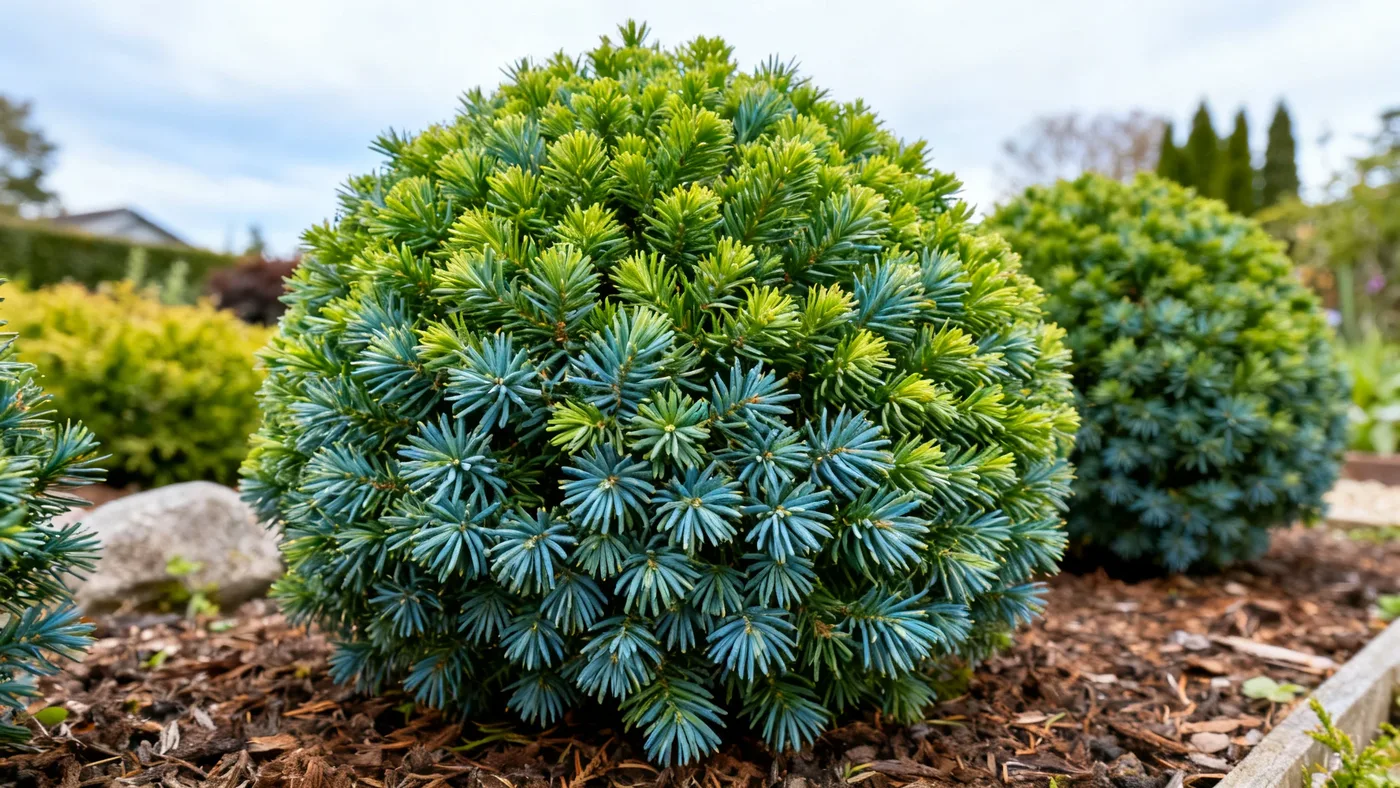
Is Dwarf Japanese Cedar Drought and Heat Tolerant?
Dwarf Japanese Cedar has become popular in home gardens as a compact, year-round focal point. If you're gardening in a hot or dry climate, or you've got a site with intense afternoon sun, you likely have one question: can this plant handle those conditions? The honest answer is: with the right foundation and ongoing care, a mature Dwarf Japanese Cedar can develop moderate drought tolerance. But the plant does not arrive drought-tough from the nursery, and heat scorch is a real risk without thoughtful placement.
Understanding the Answer: Drought and Heat Tolerance Explained
Dwarf Japanese Cedar (Cryptomeria japonica 'Globosa Nana') is a conifer native to Japan and parts of southern China. Its natural habitat is moist, well-drained woodland. Straight out of the pot, the plant has low drought tolerance because it has not yet built the deep, established root system needed to survive dry spells. Even mature plants prefer consistently moist soil and are not as bullet-proof as, say, a junipers or sedums.
That said, once a Dwarf Japanese Cedar has been in the ground for 2 to 3 years with regular water, its roots spread deeper and wider. At that point, the plant can handle moderate dry periods between waterings. Heat is a separate challenge. In hot or dry climates, the soft foliage can turn brown or bronze from foliage scorch, a sun and wind burn that happens when the plant loses water faster than the roots can replace it. The good news: afternoon shade and consistent moisture during the growing season reduce scorch risk dramatically.
What You'll Need
- A Dwarf Japanese Cedar (typically sold in a #1 or #3 container)
- Mulch (2 to 3 inches, bark chips or compost)
- Soil amendment for planting (peat moss, aged compost, or humus-rich material)
- Garden hose or drip irrigation system
- Acidic fertilizer (azalea or rhododendron-type, balanced NPK preferred)
- Pruning shears (if thinning branches later)
- Optional: landscape fabric to suppress weeds and retain soil moisture
Step-by-Step Guide to Building Drought Tolerance
Step 1: Choose a Site With Afternoon Shade in Hot Climates
The first move is siting. If you live in USDA zones 8 or 9, or in any region where summer temperatures regularly exceed 85 degrees Fahrenheit, plant your Dwarf Japanese Cedar where it gets full sun in the morning but afternoon shade from a tree, building, or fence. Morning sun helps the foliage dry quickly (reducing disease), while afternoon shade reduces foliage scorch. In zones 5 to 7, full sun is fine; the cooler climate and cloud cover provide natural protection.
Avoid low-lying pockets where cold air pools in winter, and stay clear of sites exposed to strong winds, which accelerate water loss from the foliage.
Step 2: Prepare Soil for Moisture Retention and Drainage
Dwarf Japanese Cedar thrives in moist, humus-rich, well-drained soil with a pH of 5.0 to 6.5 (acidic). When you dig the planting hole, mix the native soil with 25 to 40 percent aged compost or peat moss. This amendment improves water-holding capacity and prevents the plant from drying out too quickly. Do not amend if your soil is already heavy clay and poorly drained; in that case, focus on creating a slight mound to ensure water drains away from the base.
Amend the hole to be roughly twice the width of the root ball and just as deep. This gives roots room to expand without compaction.
Step 3: Water Deeply and Consistently for the First Two Years
Plant in spring or early fall, when cooler temperatures reduce water loss. Immediately after planting, water the soil thoroughly so it settles around the roots. For the first two years, water once or twice per week during the growing season, depending on rainfall and temperature. Aim for consistently moist (not wet) soil; 1 to 1.5 inches of water per week is a good target, either from rain or irrigation.
Use a soaker hose or drip line rather than a sprinkler. This delivers water directly to the soil, reduces foliage wetness (which can invite disease), and minimizes wind-driven evaporation. Water early in the morning so any foliage that gets wet dries quickly.
Step 4: Mulch to Moderate Soil Moisture and Temperature
Apply 2 to 3 inches of bark mulch or aged compost in a 2 to 3 foot radius around the base. Keep mulch 2 to 3 inches away from the stem to prevent rot. Mulch acts as a buffer: it keeps the root zone cooler in summer, reduces evaporation from the soil, and moderates temperature swings that stress shallow roots. Replenish mulch annually in early spring to maintain that 2 to 3 inch depth.
Step 5: Gradually Reduce Water as the Plant Matures
After 2 to 3 years of consistent moisture, your Dwarf Japanese Cedar will have a well-developed root system. At that point, you can slowly space out watering. Mature plants still prefer moist soil, but they can tolerate brief dry periods. During a dry spell in summer, water once weekly rather than twice, and monitor the plant. If the foliage starts to dull or bronze, increase frequency again.
Managing Heat and Scorch Risk
Even established plants can show foliage browning or bronze cast in extreme heat or drought. This is not necessarily a sign of disease, but it does indicate the plant is stressed. To minimize scorch in a hot climate:
- Maintain afternoon shade (as described in Step 1). If the site gets afternoon sun, consider planting a taller shrub or small tree nearby to provide filtered shade as it grows.
- Keep the soil consistently moist from late spring through early fall. Do not let the soil dry out between waterings during heat waves.
- Avoid heavy pruning or fertilizing in late summer, which forces new tender growth vulnerable to heat burn.
- Water in the early morning so foliage dries quickly. Wet foliage under hot sun does not scorch; however, some water droplets can magnify sunlight and cause leaf bleaching, so avoid overhead watering in full sun.
- During extreme heat (sustained temps above 90 degrees), consider hand-watering in the late afternoon to cool the foliage and soil gently. This is a temporary measure, not a substitute for morning irrigation.
Common Mistakes to Avoid
Expecting instant drought tolerance. A nursery plant in a quart or #1 container has a shallow root system. Planting it in a hot, dry site and expecting it to thrive without extra water sets it up to fail. Plan on 2 to 3 years of consistent moisture before the plant is truly independent.
Planting in full sun in zones 8 to 9. This is the most common error. The foliage will bronze or brown, especially in the first few years or during a dry spell, even if you water regularly. Afternoon shade is not optional in hot regions; it is essential.
Over-amending sandy soil. If your native soil is sandy and fast-draining, add compost or peat to improve water retention. But do not add so much that you create a soggy microclimate around the plant. Soggy soil invites root rot, especially in humid climates. Aim for moist and well-drained, not swampy.
Skipping mulch or applying it incorrectly. Mulch piled against the stem can rot the bark. Mulch absent altogether leaves the root zone exposed to temperature swings and rapid evaporation. The 2 to 3 inch depth at a distance of 2 to 3 inches from the stem is the sweet spot.
Assuming brown winter foliage is drought damage. Dwarf Japanese Cedar often develops a purple-bronze cast in cold winters. This is normal winter color, not drought or disease. The foliage greens back up in spring. However, if the plant bronzes in summer despite adequate moisture, or if the browning spreads and tips show dieback, investigate drought or heat stress.
Expected Results
With proper siting, initial establishment care, and ongoing attention to moisture, your Dwarf Japanese Cedar may show these outcomes:
- Year 1: Slow, steady growth (roughly 3 to 6 inches per year). Foliage remains dense and blue-green if water is consistent. No browning if afternoon shade is provided in hot zones.
- Years 2 to 3: Root system deepens. The plant becomes more resilient to brief dry spells. Foliage color is stable even in occasional hot, dry weeks.
- Years 3+: The plant develops moderate drought tolerance and can handle occasional weeks without supplemental water, though performance is best with consistent moisture. Summer scorch is minimized if afternoon shade is maintained.
Mature specimens (10 to 15 years old, reaching 3 to 6 feet wide) are much harder and more forgiving than young plants. They are better equipped to survive temporary dry spells but still benefit from regular moisture and afternoon shade in hot climates.
For more detailed guidance on year-round care, see our full Dwarf Japanese Cedar care guide. To understand how your climate zone affects this plant, check our zone-by-zone growing guide.
Quick Reference: Drought and Heat Tolerance Checklist
| Condition | Action | Timeline |
|---|---|---|
| New planting (year 1) | Water 1 to 1.5 inches per week; mulch 2 to 3 inches deep | Ongoing through growing season |
| Zones 8 to 9 (hot climate) | Provide afternoon shade; avoid full-day sun | Year-round, especially May through September |
| Soil preparation | Mix in 25 to 40% compost or peat moss; target pH 5.0 to 6.5 | At planting |
| Foliage bronzing in summer | Increase watering frequency; check afternoon shade | As needed during heat waves |
| Established plant (year 3+) | Space watering to once weekly; reduce during cool, wet periods | Ongoing; adapt to rainfall and temperature |
| Mulch refresh | Top up to maintain 2 to 3 inches; stay 2 to 3 inches from stem | Early spring, annually |
| Fertilizer (optional) | Apply acid-formulated (azalea or rhododendron-type) fertilizer in early spring | Once per year in spring |