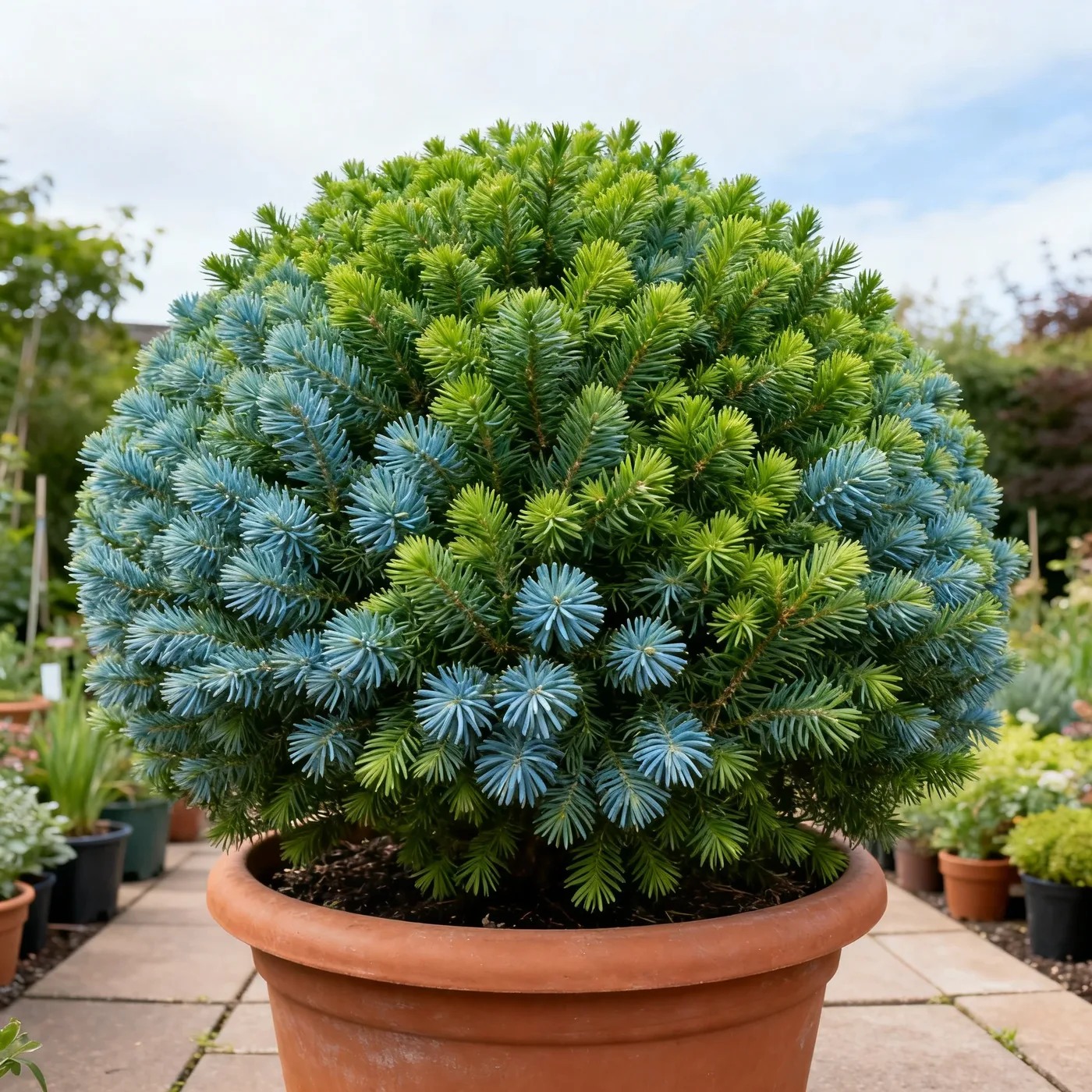
Dwarf Japanese Cedar
Cryptomeria japonica 'Globosa Nana' (nursery trade often sells unnamed dwarf globe forms under this generic name; confirm cultivar tag before publishing)
Dwarf Japanese Cedar, Dense Evergreen Conifer Ready to Plant
This size is not in the online store yet. Ask about availability and we will reply with current stock.
- Slow growth and dense mound form ideal for small spaces and foundation plantings
- Bronze-purple winter color adds year-round landscape interest
- Tolerates part shade to full sun; good deer resistance and container-suitable
About this plant
This is a slow-growing evergreen conifer with dense, rounded mound form and an excellent long-term choice for multiple garden roles. It excels as a foundation plant, rock garden accent, specimen shrub, or in mixed conifer borders, and shines in Asian-inspired garden design. The foliage takes on attractive bronze-purple tones during winter months, adding seasonal interest to the landscape.
Your Dwarf Japanese Cedar arrives in a nursery container, ready to plant. Upon arrival, water the container thoroughly and choose a location with full sun to part shade. Plant within the first week if possible. Container-grown plants respond well to immediate planting but benefit from consistent water and mulch application during establishment.
Dwarf Japanese Cedar at a glance
| Botanical name | Cryptomeria japonica 'Globosa Nana' (nursery trade often sells unnamed dwarf globe forms under this generic name; confirm cultivar tag befor |
|---|---|
| Plant type | evergreen shrub (dwarf conifer) |
| USDA zones | 5-9 |
| Mature height | 3-6 ft (varies by cultivar and age; slow but not truly dwarf long-term - some specimens exceed this after 20+ years) |
| Mature width | 4-6 ft, dense rounded mound |
| Sun | full sun to part shade; some afternoon shade helps in hot/dry climates to reduce foliage scorch |
| Water | medium/regular; prefers consistently moist soil, not drought tolerant while establishing |
| Bloom time | not grown for bloom (conifer); produces small inconspicuous cones |
| Bloom color | not applicable - no ornamental flowers |
| Growth rate | slow, roughly 3-6 inches per year |
| Deer resistance | good - resinous conifer foliage is generally low-preference for deer, though not deer-proof in high-pressure areas |
| Best planting time | spring or early fall, allowing root establishment before temperature extremes |
Container sizes explained
| #1 / 1 Gallon | A trade one gallon pot (about 6.5 inches). One to two seasons older than a quart, with an established root system. |
|---|---|
| #2 / 2 Gallon | A trade two gallon pot. Common for peonies and perennials that need root room; usually blooms the first or second year. |
| #3 / 3 Gallon | A trade three gallon pot (about 10 inches). A well-developed shrub or small tree, often 2 to 4 feet tall on arrival. |
Questions before you buy
Should I choose the 1-gallon or 3-gallon size?
The 1-gallon is a younger, smaller plant ideal for budget-conscious buyers or mixed plantings. The 3-gallon has an established root system and shows more mature form immediately. Both will reach similar sizes long-term; choose based on budget and immediate visual impact you prefer.
When should I plant after receiving it?
Plant within the first week of arrival if possible. Ensure the location receives full sun to part shade and has consistently moist, well-draining soil. Avoid planting during extreme heat or cold, though container plants can establish through most seasons.
How large will my Dwarf Japanese Cedar become?
At maturity, expect a dense rounded mound roughly 3-6 feet tall and 4-6 feet wide. Growth is slow, averaging 3-6 inches per year, so it may take 10-15 years to reach a substantial mature size. Some specimens can eventually exceed these dimensions after 20+ years.
Does it need full sun?
It performs best in full sun to part shade. Afternoon shade in hot or dry climates helps prevent foliage scorch, making it adaptable to varied light conditions. Ensure it receives at least a few hours of good light daily for dense, attractive form.
Will this cedar grow in my zone?
This cultivar thrives in USDA hardiness zones 5-9. Check your zone on the USDA Hardiness Zone map to confirm compatibility. If you're within this range, the plant should establish well in your area.
What does first-year care involve?
Keep soil consistently moist during establishment, as the plant is not drought-tolerant when young. Apply mulch around the base to retain moisture and maintain even soil temperature. Water during dry spells and avoid waterlogging, which the plant dislikes despite preferring moist soil.