Dwarf Japanese Cedar vs Cryptomeria Radicans: Size and Growth Rate
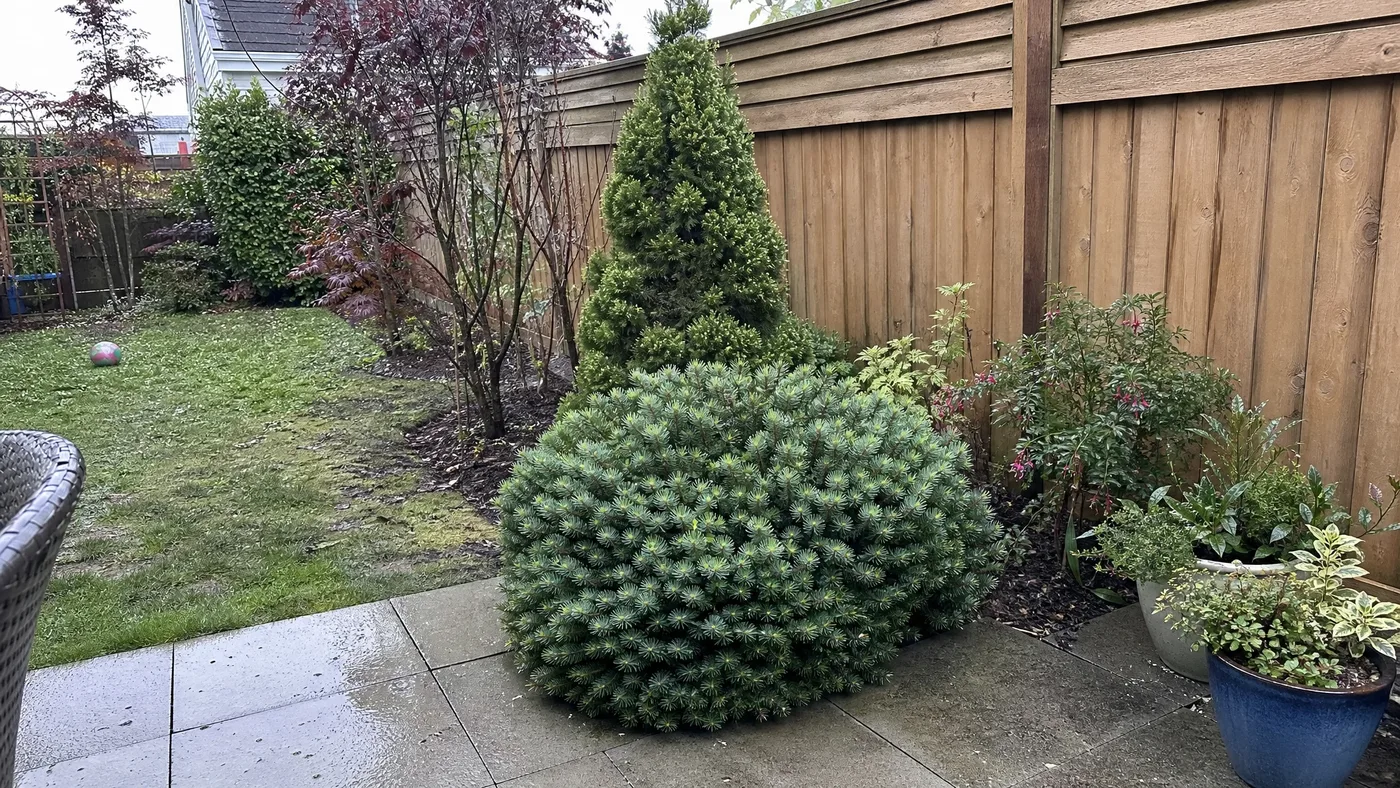
Every year, usually in late summer, the phone rings with the same call. A customer bought a "dwarf cryptomeria" three seasons back, planted it beside the porch steps, and now it is looking over the rail and heading for the gutter. They want to know what went wrong with the plant. Nothing did. It was the wrong plant for the spot, and the label said otherwise.
This guide covers everything you need to know about telling Dwarf Japanese Cedar apart from Cryptomeria Radicans, from the way the mislabel happens to the size and growth rate of each, and from the planting mistakes it causes to the tag checks that prevent it. Get it wrong and you end up with a tall screen tree crowding a foundation bed. Get it right and you get a low, tidy dome that behaves for decades.
Why Radicans Gets Sold as a Dwarf Cryptomeria
Both plants are Japanese cedar, Cryptomeria japonica, so the confusion starts with the botany. The species is a big evergreen, and growers have selected many forms from it. Some are tiny domes, one of which is 'Globosa Nana'. Some are upright and fast, and Radicans is one of those. They share a genus, a species name and a lot of search traffic, so a shopper typing "dwarf cryptomeria radicans" is mixing two very different plants into one phrase.
The mislabel at the nursery is mostly a shelf problem. Young Radicans in a one-gallon pot looks small, and a small plant on a bench gets a small-plant name. Lazy tagging does the rest: "cryptomeria, dwarf" gets printed because the pot is dwarfish at that moment, and nobody checks it against the mature size. Trade names are loose too. Unnamed dwarf globe forms are often sold under a generic name, which is why the cultivar tag matters so much.
The word "dwarf" describes a plant's habit at maturity, not the size of its pot in spring. A true dwarf stays small for life. A young tree is only small for now.
A Dwarf Japanese Cedar Rounds Off Low
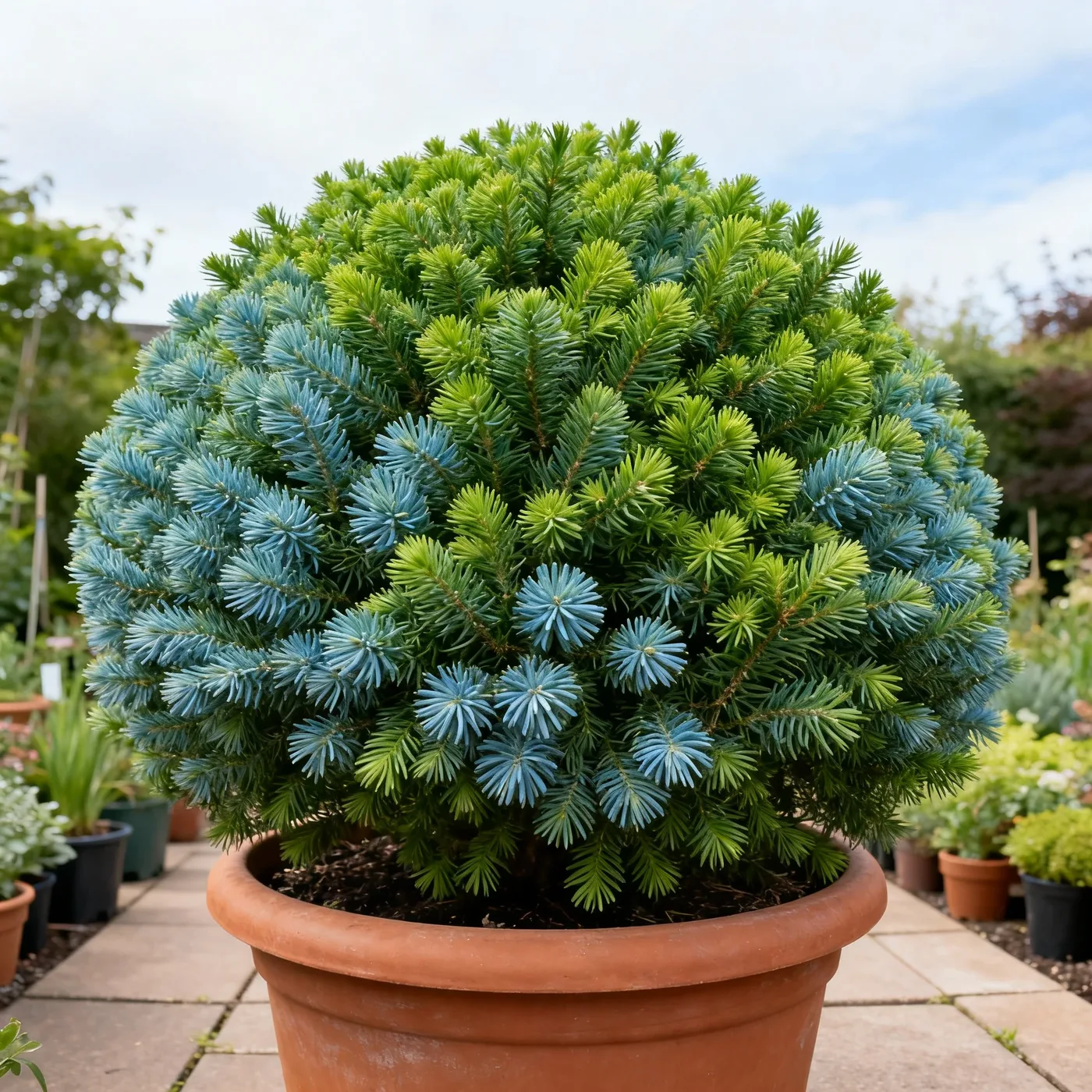
NC State Extension gives 'Globosa Nana' a mature height of 2 to 4 feet and a width of 3 to 4 feet. That is a dome you can step over, with the width usually matching or beating the height. Our older notes claimed 3 to 6 feet tall, and the extension figure is the one to trust. It can creep larger with age, so plan for the top of the range in a very old specimen, not for a hedge.
The shape comes without help. Its naturally rounded habit needs no maintenance to keep its form, so there is no shearing season and no wrestling with a leader that wants to go up. If you are curious how that plays out over the years, our guide on how big Dwarf Japanese Cedar gets and how fast walks through it.
Color is the other thing that sets the cultivar apart. The needles are bluish-green and awl-shaped, and they turn rusty-red through the winter months. In a bed that is bare in January, a rust-colored dome is a feature, and you do not need to panic about it. That is its winter coat, not a sign of dying. If you want the full list of what separates the cultivars, our cultivar comparison covers them.
Radicans Wants Tall Room and a Ladder
Radicans is sold as an upright privacy tree, and it behaves like one. It comes from a species that reaches 50 to 70 feet tall and 20 to 30 feet wide, while Clemson puts it at 50 to 80 feet tall with the same width. Radicans is a selection, so you may not see the full species height in a yard, but you should plan as though it is aiming that way. A selection sold for screening does not stop at a convenient height.
That changes how you think about the spot. A tree like this needs open sky overhead, a clear path for a ladder or lift if you ever want to trim the top, and a setback from the house, the septic field and the power line. It also wants room at the base. Width on a mature specimen is measured in tens of feet, not in the 3 to 4 feet a dwarf dome takes.
What a Tall Cryptomeria Does Well
Used correctly, it is a good plant. The species is deer and rabbit resistant, with a slow to medium growth rate, and it forms a dense evergreen wall when planted in a row with space between trees. It prefers rich, moist, acidic, well-drained soil. For a big property that needs a screen, we have no argument with it. Our argument is only with putting it where a shrub was meant to go.
Slow Dome Against Fast Spire Over Ten Years
The sources do not give a per-year growth figure for either plant, so we will not pretend to one. What they do give is the rate class: the cultivar is slow-growing, and the species is slow to medium. In practice that gap shows up quickly. A dwarf dome adds a small amount of girth and height each season, and after a decade it still looks like the same plant you bought, just more settled. A young Radicans adds height you can measure in feet rather than inches, and it reads as a different plant by year five.
Here is how the two compare across the first ten years, using the extension numbers for the end point and what we see in the field for the path.
| Point in time | Dwarf Japanese Cedar | Radicans |
|---|---|---|
| Year 1 | Compact starter plant, hard to tell from the pot | Small upright whip that looks harmless |
| Year 5 | A modest dome, low enough to see over | A young tree that has outgrown most beds |
| Year 10 | Still within a few feet, inside its 2 to 4 foot mature height | Well above head height and still climbing |
| Maturity | 2 to 4 feet tall, 3 to 4 feet wide | Tall tree on the species scale of 50 to 70 feet |
The practical lesson is that the early years mislead you. In our rows, the two look similar for the first season or two, and that is exactly when people buy. By the time the difference is obvious, the roots are in and the tree is too big to move easily.
Planting Radicans Where a Dwarf Japanese Cedar Belongs
This is the costly mistake. Someone buys a tagged "dwarf cryptomeria," plants it a foot from the porch or the foundation, and spaces it for a 4-foot shrub. Radicans in that slot gets pressed against siding, shades windows, drops needles into gutters and eventually lifts its canopy over the roofline. The tree is doing nothing wrong. It is just following the species, which spreads 20 to 30 feet wide at full size.
The fix is expensive. A small tree can be moved, but the older it gets the worse the job becomes, and a large one usually means cutting it out and replacing it. You lose the years of growth, you pay for removal and you still need to buy the right shrub. If you want to see how a transplant goes while the plant is still small, read our transplanting guide, but the better answer is not to need it.
Spacing the Right Plant
If you do have a true dwarf, give it breathing room in a bed, not a wall. At 3 to 4 feet wide, it does well near a patio, in a mixed border, or beside a path where it will not be shoved aside. It performs best in full sun to partial shade with moist, well-drained soil of any texture and pH, which makes it far easier to place than the species. For ideas that suit that size, see our landscape uses and companion plants.
Reading a Nursery Tag Before You Pay
One of the most common questions customers ask us is how to tell which one is in the pot. The answer is almost never the pot size or the word "dwarf." Look for the botanical name and the cultivar in quotes. A tag that says Cryptomeria japonica 'Globosa Nana' tells you the plant you want. A tag that says only "cryptomeria" or "dwarf cryptomeria" tells you nothing, and one that says 'Radicans' tells you the opposite of what the search term suggested.
Some retailers print the generic name anyway, and the trade does sell unnamed dwarf globe forms under the 'Globosa Nana' name, so the tag is a starting point and not a guarantee. Run through these checks before you pay.
- Find the cultivar name in single quotes after the species name, and make sure it reads 'Globosa Nana' for the dome you want.
- Look for a stated mature size on the tag, and treat anything over about 4 feet tall as a flag.
- Check the habit description. A rounded, dome or globe shape fits the dwarf, while "upright," "pyramidal" or "screen" belongs to a tall form.
- Ask the seller for the plant's mature height in feet. If they cannot say, buy somewhere that can.
Our buying guide on container sizes covers the sizing side of the purchase. Do the name check first and the size check second.
When Dwarf Japanese Cedar Is the Right Call and Radicans Isn't
Pick the dwarf when you want something that stays where you put it. That means foundation beds under windows, porch corners, rock gardens, entry borders, and containers. It earns its place with year-round shape and that rusty winter color, and it needs no pruning to hold its form. The cultivar grows in zones 6a to 9b, with 8b missing from the list, while the species runs 5a to 9b. Check your zone against that before you commit, since the cultivar sits slightly narrower than the species.
Pick Radicans when you have the room and you want a living wall. Along a back property line or a long fence run, with 20 or more feet of width to spare, a fast upright cryptomeria is a sensible screen. It is not a foundation plant, and it is not a pot plant. Putting it in a small space and hoping the label was right costs more than the plant ever did.
Our take is simple. If the spot is smaller than a car, plant the dome. If the spot is bigger than your house, plant the tree. If you are unsure which you have, assume the worst and measure the space for the tall one before you dig. For a related look at another look-alike buyers confuse with this shrub, see our dwarf hinoki cypress comparison.
Dwarf Japanese Cedar Wins on Small Ground
The difference between these two plants is the difference between a shrub you admire for twenty years and a tree you call someone to remove. Dwarf Japanese Cedar is a slow, rounded dome of 2 to 4 feet that colors up rusty-red in winter. Radicans is an upright screen tree on a species that reaches 50 feet or more. Same genus, same species, completely different jobs.
Dwarf Japanese Cedar
Nursery-grown Dwarf Japanese Cedar in sizes from 1 Gallon, shipped to your door.
From $39.97
Shop Now →Cedar size is settled long before a plant reaches your yard, which is why we raise ours on our own farms in sunny beds with a touch of light shade, in soil that stays evenly moist and lets extra water drain away. We grow and sell top-quality trees and shrubs from those farms, and each is one we would happily plant at home. When you have decided that a slow, compact dome is the right fit for your space, start with one of ours.