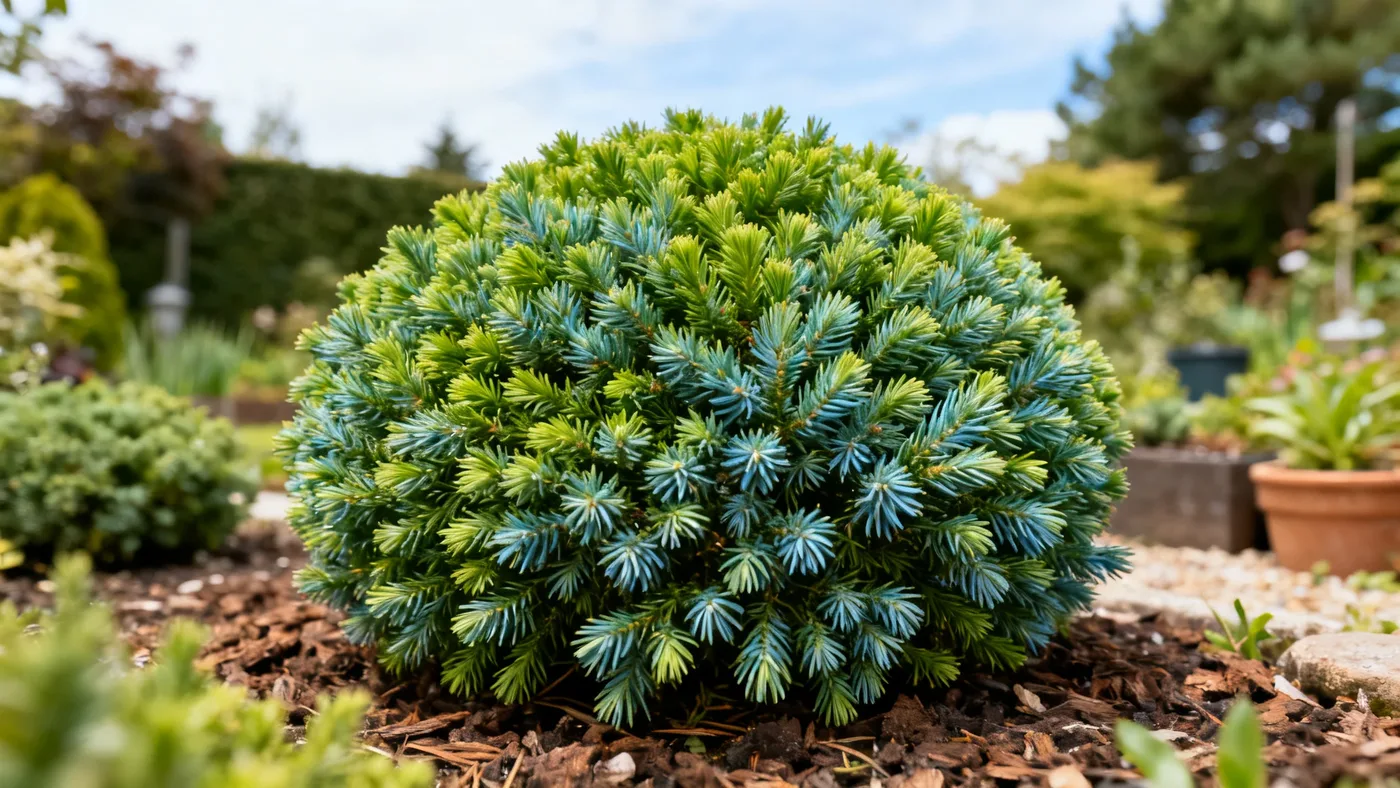
Dwarf Japanese Cedar vs Dwarf Hinoki Cypress: Key Differences
If you are shopping for a compact, evergreen conifer to anchor a foundation bed or accent a rock garden, you have likely run into both dwarf Japanese cedar and dwarf Hinoki cypress at the nursery. Both offer dense, mounded forms and soft foliage in cool tones. But these two plants are not interchangeable, and the difference between Cryptomeria and Chamaecyparis matters when you are planning for 10, 20, or 50 years ahead. This guide walks you through the practical distinctions so you can pick the right shrub for your site.
At a Glance: The Core Differences
The fastest way to tell these plants apart in the nursery is to look closely at the foliage and ask about the botanical name on the tag. Dwarf Japanese cedar (Cryptomeria japonica, typically sold as the 'Globosa Nana' or similar dwarf globe form) has soft, awl-shaped needles arranged in whorled sprays that feel almost feathery when brushed. Dwarf Hinoki cypress (Chamaecyparis obtusa dwarf cultivars) tends to have flatter, scale-like foliage arranged in finer, more fern-like sprays. The needle texture is the first clue.
| Attribute | Dwarf Japanese Cedar | Dwarf Hinoki Cypress |
|---|---|---|
| Botanical name | Cryptomeria japonica (dwarf forms) | Chamaecyparis obtusa (dwarf cultivars) |
| Hardiness zones | 5-9 | Typically 4-8 (varies by cultivar) |
| Mature height | 3-6 ft | 2-5 ft (cultivar-dependent) |
| Mature width | 4-6 ft | 3-5 ft (cultivar-dependent) |
| Growth rate | Slow, 3-6 inches per year | Very slow to slow |
| Foliage texture | Soft, awl-shaped needles; feathery feel | Fine, flattened scale-like foliage; fern-like appearance |
| Winter color | Often bronzes or purples in cold | May take on bronze or steel tones |
| Soil preference | Moist, humus-rich, well-drained; acidic (pH 5.0-6.5) | Moist, well-drained, acid-loving |
| Drought tolerance | Low to moderate (poor while young) | Moderate once established |
| Salt tolerance | Low | Low to moderate |
Dwarf Japanese Cedar: Softness and Seasonal Drama
Dwarf Japanese cedar grows as a dense, rounded mound with a distinctive soft feel. The foliage is fine and feathery rather than scale-like, which gives it a looser, more organic appearance than many other conifers. In summer, the needles stay blue-green to medium green. In cold winters, the foliage shifts toward bronze, purple, or reddish tones, then greens back up as temperatures warm in spring. This seasonal color swing is normal and not a sign of stress, though it can catch new growers off guard.
Hardiness-wise, dwarf Japanese cedar thrives in zones 5-9, making it a reliable choice across the mid-Atlantic, upper South, and most of the country except the coldest northern regions and the most arid Southwest. The species is native to Japan, and the dwarf forms sold in North America are nursery-selected cultivars bred for compact shape.
Expect slow growth: roughly 3-6 inches per year. This means a young plant from a nursery pot will take 10-15 years to reach a substantial mounded form. That slow pace is ideal if you want a shrub that stays neat without constant pruning, but it also means patience is required if you are trying to fill a space quickly.
Dwarf Hinoki Cypress: Fine Texture and Compact Discipline
Dwarf Hinoki cypress (Chamaecyparis obtusa dwarf selections) builds its form from flatter, finer, scale-like foliage that creates an almost fern-like or feathery spray pattern. The texture is delicate and refined, often with less visual volume than Japanese cedar at the same age. Many gardeners prize Hinoki for its sculptural, almost bonsai-like quality.
Hinoki cypress generally prefers colder zones than Japanese cedar, with most dwarf cultivars rated for zones 4-8. This advantage in cold hardiness can be significant if you garden in the northern tier of the country. However, the exact hardiness range varies by cultivar, so always check the plant tag or ask your nursery before buying if you live on the edge of zone 4.
Growth rate for dwarf Hinoki is very slow to slow, often similar to or slightly slower than Japanese cedar. Ultimate size also varies more widely among Hinoki cultivars than among Japanese cedar forms, so a mature Hinoki dwarf might stay closer to 2-3 feet tall and wide, or might reach 4-5 feet depending on the named variety. This is where checking the cultivar name on the tag becomes crucial.
Foliage Texture: The Most Obvious Difference
Run your hand over both plants at the nursery and you will feel the difference immediately. Japanese cedar foliage is softer and more three-dimensional, with awl-shaped needles that radiate outward. Hinoki foliage is flatter, more two-dimensional, with a finer, almost compressed appearance. In bright sunlight, Japanese cedar often looks more voluminous and feathery, while Hinoki appears more refined and sculptural.
This is not a matter of health or care, just botanical difference. Both can be equally lush and healthy. It is a matter of aesthetic preference. If you like a soft, organic, slightly wild look, Japanese cedar edges ahead. If you prefer fine, controlled, almost bonsai-like form, Hinoki is the stronger choice.
Hardiness: Where They Diverge Most
Dwarf Japanese cedar is rated for zones 5-9, which covers much of the eastern and central United States, the Pacific Northwest, and parts of the upper South. Zone 4 gardeners are largely excluded unless they find an exceptionally hardy cultivar (not guaranteed in the nursery trade).
Dwarf Hinoki cypress typically extends hardiness to zone 4, making it the better choice if you live in the Upper Midwest, northern New England, or mountain regions where winter temperatures regularly dip to minus 20 to minus 30 degrees Fahrenheit. If cold hardiness is a deal-breaker for your region, Hinoki is the safer bet.
Conversely, if you garden in the Deep South or Southwest (zones 9 and beyond), Japanese cedar is often the more reliable choice because many Hinoki cultivars struggle with summer heat and humidity once hardiness is no longer a concern.
Soil and Water: Broadly Similar, With One Key Caveat
Both dwarf Japanese cedar and dwarf Hinoki cypress prefer moist, humus-rich, well-drained soil on the acidic side (pH 5.0-6.5 for Japanese cedar, and Hinoki similarly favors acid soil). Both are poor choices for dry, sandy sites or for hot, exposed locations where the soil dries out between waterings. Both need consistent moisture, especially during establishment in the first year or two.
Dwarf Japanese cedar has notably low drought tolerance while establishing. Young plants that are left dry for extended periods can brown out and may not recover. Once well-rooted after 2-3 years, Japanese cedar becomes more resilient but still prefers regular water, especially in zone 9 heat or in windy sites.
Dwarf Hinoki cypress shows moderate drought tolerance once established, which is a minor advantage if you live in a region with dry summers or if your garden site is naturally exposed and drains quickly.
Salt tolerance is low for both species, so avoid planting either in coastal salt spray zones or near roads heavily treated with de-icing salt.
Pests and Diseases: Similar Vulnerabilities
Both dwarfs can be targeted by spider mites, particularly in hot, dry summers. Japanese cedar is also prone to scale insects and occasional bagworms. Hinoki is generally less troubled by bagworms but can struggle with root rot in consistently waterlogged soil.
Both dislike standing water. If your site has poor drainage, amending the soil with compost or perlite before planting is essential for either species.
Pros and Cons: Dwarf Japanese Cedar
Pros:
- Soft, feathery foliage with fine tactile appeal
- Bold winter color shift adds seasonal interest
- Wide hardiness range (zones 5-9)
- Dense, rounded form requires minimal pruning
- Well-suited to containers when young
- Good deer resistance due to resinous foliage
- Long lifespan, commonly 50+ years
Cons:
- Very low drought tolerance during establishment
- Not reliable in zone 4
- Susceptible to spider mites in heat and drought
- Slow growth means 10-15 years to reach substantial size
- Low salt tolerance excludes coastal and road-adjacent sites
- Winter bronzing can look diseased to untrained eyes (it is not)
Pros and Cons: Dwarf Hinoki Cypress
Pros:
- Hardier to zone 4, ideal for cold climates
- Fine, sculptural foliage offers refined appearance
- Moderate drought tolerance once established
- Compact form options within the species
- Popular in Japanese and bonsai-inspired gardens
- Very long-lived
Cons:
- Cultivar identity matters greatly; sizes vary widely
- Less winter color interest for many gardeners
- Foliage can appear thin or sparse compared to Japanese cedar
- Susceptible to root rot if drainage is poor
- Fine foliage can brown if exposed to harsh winter wind
- Not as commonly available in all regions
Which Should You Choose?
Choose Dwarf Japanese Cedar if:
- You garden in zones 5-9 and want reliable winter interest
- You prefer a softer, more organic texture
- You need dense, trouble-free form without much pruning
- You enjoy the seasonal shift from green to bronze
- You are planting in a foundation bed or mixed shrub border with regular water access
- You want a plant that works well in containers while young
Choose Dwarf Hinoki Cypress if:
- You live in zone 4 or colder and need proven winter hardiness
- You prefer a finer, more refined, sculptural form
- You are planning a Japanese or bonsai-inspired garden
- Your site has moderate drainage and you cannot guarantee consistent water
- You want a shrub that holds its green color year-round
- Cultivar options and ultimate size can be carefully matched to your space
Planting and Care Essentials for Dwarf Japanese Cedar
If you choose dwarf Japanese cedar, the following care steps will set you up for success. Plant in spring or early fall to allow root establishment before temperature extremes. Space plants 4-6 feet apart if planting multiples. Choose a site with full sun to part shade (afternoon shade in hot climates helps reduce foliage scorch). Amend the planting hole with compost or peat moss to ensure moist, humus-rich soil.
Water deeply after planting and keep the soil consistently moist (not waterlogged) for the first 2-3 years. Once established, Japanese cedar tolerates moderate dryness but still prefers regular water. Light annual feeding in early spring with a balanced or acid-formulated fertilizer keeps foliage healthy. Minimal pruning is needed if the form is allowed to develop naturally, but if shaping is desired, prune in late winter to early spring before new growth flushes.
For detailed step-by-step guidance, see our dwarf Japanese cedar care guide.
The Verdict
The difference between Cryptomeria and Chamaecyparis comes down to climate, soil, and aesthetic preference. If you live in zones 5-9 and can offer consistent moisture and good drainage, dwarf Japanese cedar is a rewarding choice with beautiful winter color and soft foliage texture. If you live in zone 4 or prefer a finer sculptural form, dwarf Hinoki cypress is worth the hunt for the right cultivar.
Both are long-lived, low-maintenance shrubs when sited correctly. Both make excellent choices for rock gardens, foundation beds, and Asian-inspired landscapes. The choice is not a matter of right or wrong, but fit.
Quick Reference Checklist
| Question | Dwarf Japanese Cedar | Dwarf Hinoki Cypress |
|---|---|---|
| Do you live in zone 4? | Not ideal | Yes, choose this |
| Do you live in zones 5-9? | Yes, excellent | Yes, both work |
| Do you want winter color interest? | Yes, bronze-purple shift | Minimal seasonal change |
| Do you prefer soft, feathery texture? | Yes | No, finer and flatter |
| Can you provide consistent moisture? | Essential (especially young) | Helpful but more forgiving |
| Do you have very well-drained soil? | Ideal | Preferred |
| Will the plant experience salt spray or road salt? | Avoid both | Avoid both |
| Are you planning a bonsai or Japanese garden? | Either works | Stronger choice |
| How long do you want the plant to live? | 50+ years | 50+ years |