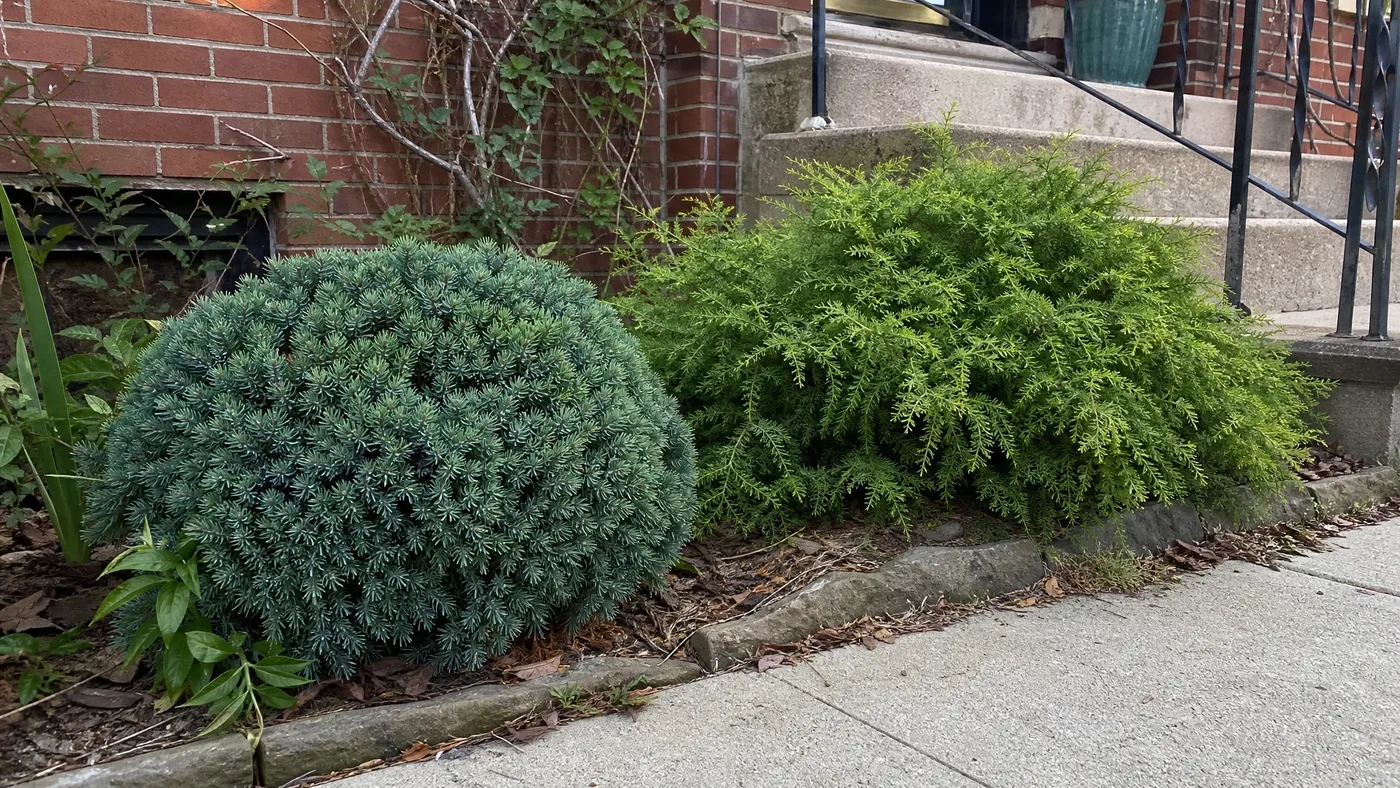
Dwarf Japanese Cedar vs Dragon Prince Cryptomeria
Picture yourself in a nursery aisle with a pot in each hand. Both hold a neat green mound of Cryptomeria, both stand about the same height, and one carries a noticeably higher price tag. The question we hear most is what, exactly, the extra money buys.
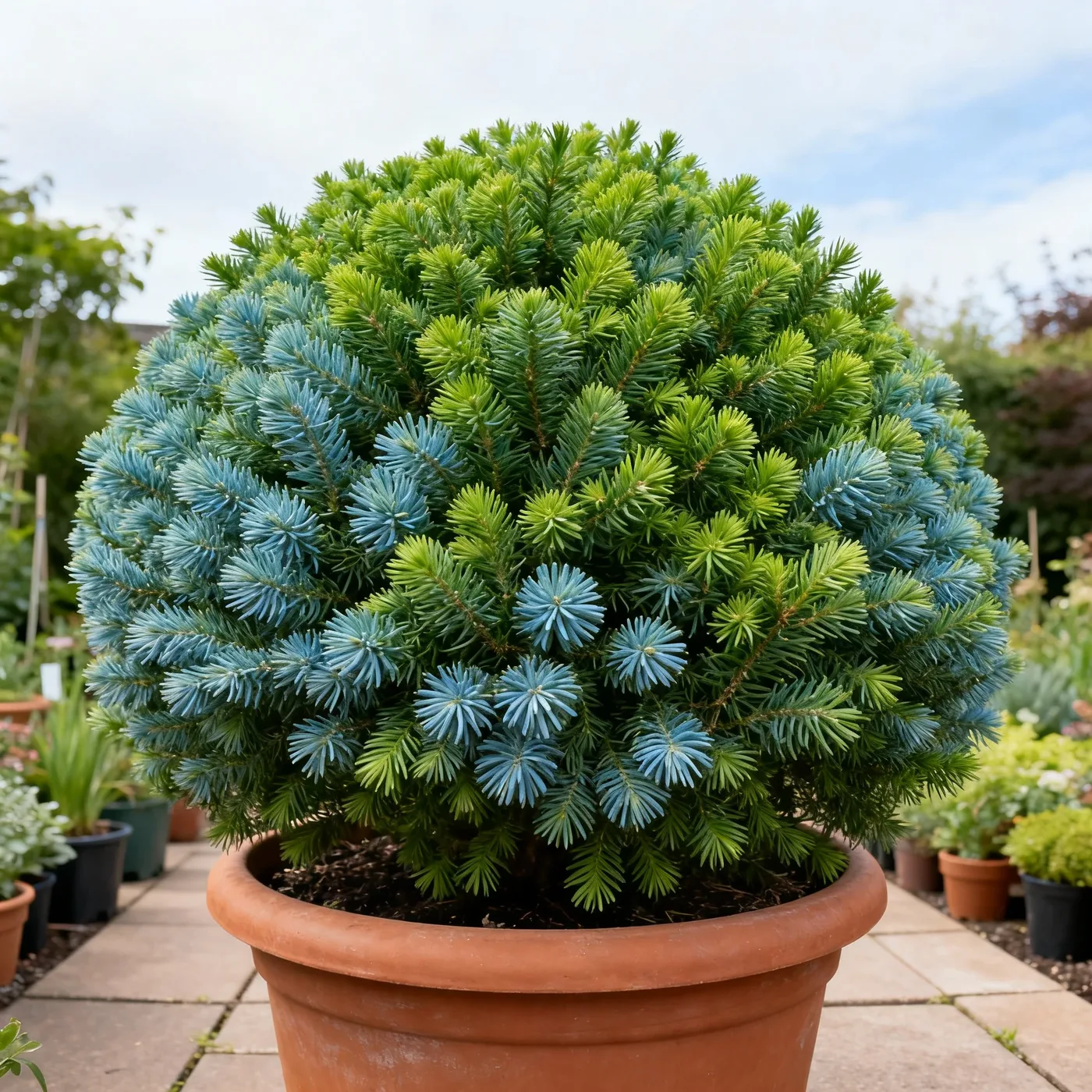
The classic is 'Globosa Nana', an old cultivar of a tree native to central and southern Japan and China. 'Dragon Prince' is the newer selection, bred for a tighter, more uniform dome and better resistance to tip blight. Whether that is worth paying for depends far more on your yard than on the plants.
Below, you'll find out all about how these two dwarf Japanese cedars compare, including how each handles a narrow side bed, a windy corner, a hot deck, a damp yard with a blight history, and a spot next to shrubs you already own. We will tell you which one we would pick each time.
The Narrow Side Bed Beside the Garage
Take the strip between a garage wall and a walkway, shaded by eaves for part of the day. The worry is whether the plant will crowd the siding or spill onto the path in a few years. Width, not height, answers that, so we start there.
Width Decides Everything
The classic grows 2 to 4 feet tall and 3 to 4 feet wide, and it grows larger with age. A 4-foot spread is a lot to ask of a bed only a few feet deep. The classic's looser, cascading habit also sends outer branches toward the path, and as it ages the globe can open up and lean toward the light.
Dragon Prince is described as a compact, slow-growing dwarf with a dense, rounded shape, and that tidiness is exactly what a tight strip rewards. We have no published mature width for it that we would stand behind, so ask for the figure on the tag or check with your local extension service before you commit.
For spacing, keep the center of the plant at least half its mature width away from the wall and from the path edge. For a classic that could reach 4 feet across, that means 2 feet of clear ground on each side. In a narrow bed, plan for the top of the size range, not the bottom.
Shade and Dry Soil Under Eaves
Both plants take full sun to partial shade, so the eave shade is not the trouble. Rain is. Eaves keep it off the soil nearest the wall, while roof runoff soaks the ground farther out. Plant away from the wall, check the soil with a finger, and water in dry spells, because these cedars want moist, well-drained ground. Our guide to how big and how fast the classic grows will help you judge how long the fit lasts.
Our pick for this strip is Dragon Prince, because it stays where you put it. If you love the softer cascade and can give it the extra width, the classic is still a lovely choice.
A Windy Corner Lot Tests Dwarf Japanese Cedar
A corner lot takes wind from two directions, and winter gusts funneling down the street are what dry out evergreen needles. The good news is that these are low plants, so they sit under the worst of it. What the wind really does is show you how each form is built.
How the Classic Dome Copes
The classic's loose, cascading branches move with every gust. In a sheltered bed that gives it a relaxed look. On an exposed corner, over several years, the same openness lets the globe gap in the middle and lean away from the prevailing wind. In our rows, the plants at the end of a row, the ones that take the weather first, are always the first to start leaning.
Two things are worth knowing before you worry. Its bluish-green needles turn rusty-red in winter, which is normal color and not wind damage. Real wind burn looks like dry brown patches on the windward side. The classic also resists salt, which helps if street spray reaches your corner.
What Dragon Prince Adds
A denser dome gives gusts less to grab. NC State describes Dragon Prince as a compact, slow-growing dwarf with soft green foliage and a dense, rounded shape, and we would expect it to hold its outline better here. No cultivar is a windbreak, though, and none is immune to a hard winter.
Whichever you buy, set it where a fence, wall or larger shrub takes the edge off the wind, water well before the ground freezes, and keep mulch pulled back from the stem. The classic is listed for zones 6 to 9, so at the cold end of that range an exposed spot is where we would lean on Dragon Prince. Our winter care guide for cold climates covers the routine in more detail.
Dwarf Japanese Cedar on a Hot Sunny Deck
A pot on a south-facing deck is the harshest test of the three. The boards and the house wall throw heat back up at the plant, and a container holds far less soil to buffer it than a bed does. The sun itself is fine, since both plants like full sun. The baking roots are the real problem.
Baking Roots and Reflected Heat
The classic resists heat and drought, and in the ground that holds up well. In a pot we would not lean on it. An Arkansas extension fact sheet says the species lacks drought tolerance, and it needs irrigation during drought. A pot is a small drought waiting to happen.
Use the largest pot your deck can carry, choose a light color if you can, lift it off the boards on pot feet, and move it out of any corner where two walls bounce heat back. Our guide to growing dwarf Japanese cedar in pots goes through pot sizes and mixes.
A Watering Rhythm That Works
Skip the calendar and check the soil. Push a finger in to the first knuckle, and if it feels dry, water slowly until it runs out of the drainage holes. In midsummer that may be daily. In spring and fall it will be far less. Empty the saucer, because the plant wants moist soil that also drains well.
Scorched Tips and Which Plant to Pot
Brown, crisp tips on a deck plant are nearly always heat and thirst, not disease. Check the root ball first, water deeply, and clip off what has died. Do not panic and reach for a spray.
We have no evidence that Dragon Prince handles heat better than the classic, so choose on looks. The classic's cascading globe suits a relaxed pot, and Dragon Prince makes a tidy, formal pair beside a door. Its compact, slow growth also means it stays in its pot comfortably for longer.
The Blight-Prone Yard Where Dragon Prince Earns Its Keep
Now the yard that can really justify the higher price: humid summers, wet springs, and a history of cedar tips browning and dying back. Clemson says Cryptomerias are typically insect-free but may have leaf blights or fungal diseases, and a damp yard is where that "may" turns into "does".
Customers usually ask us whether Dragon Prince is blight-proof. It is not. It was bred for improved tip-blight resistance, which means better odds and milder trouble in a bad year, not a guarantee.
Where the Resistance Pays Off
It matters most where the conditions favor blight: still, humid air, shade that dries slowly, plants set close together, or a nearby cedar that has browned before. Planting the classic there is a gamble. Dragon Prince shifts the odds in your favor, and that is what the extra money buys in this kind of yard.
Where It Is Oversold
The classic has no significant problems, and plenty of Globosa Nana never see blight at all. In a drier, open, sunny yard you would be paying for protection you may never need. Resistance also cannot rescue a bed that stays soggy, since both plants want moist but well-drained soil.
Whichever you plant, these habits do more than the name on the tag:
- Space plants so air moves between them and the wall or shrub behind.
- Water at the base in the morning so needles dry quickly.
- Clip browned tips out cleanly and bin them rather than composting them.
- Keep mulch off the stem, and fix drainage before you plant, not after.
If browning does appear, our list of common dwarf Japanese cedar problems and fixes will help you tell blight from heat or dryness.
When a Dwarf Japanese Cedar Joins an Existing Border
Slotting a new plant beside established shrubs is less about the plant and more about whether the pair looks planned. Form and color do most of that work.
Matching Form
Dragon Prince's tight dome reads as deliberate beside clipped boxwood, a stone edge or other structured shrubs. The classic's looser globe suits a mixed border with grasses and perennials, where a softer outline fits the surroundings. Neither needs shearing, since the classic's naturally rounded habit needs no maintenance to keep its form. Our list of landscape uses and companion plants has more pairing ideas.
Matching Color
The classic has bluish-green needles that turn rusty-red in winter, so it gives a border a seasonal shift. Dragon Prince is described with soft green foliage, so it sits more quietly beside your neighbors. Ask the nursery how a particular plant colors in your winter before you build a scheme around it.
If you want repetition, buy two or three of the same cultivar rather than mixing. A classic and a Dragon Prince can look like twins in their pots, but by year five they will have gone separate ways as the classic loosens.
Check the Cultivar Name
The trade often sells unnamed globe forms under a generic name. Oregon State notes some 200 cultivars are available in Japan, many not in the U.S. trade, so a look-alike is easy to end up with. A tag that names the cultivar is worth asking for.
Choosing Between Two Good Domes
Here is the warm version. A narrow bed, a windy corner or a damp, blight-prone yard points to Dragon Prince, because its tight dome stays put and its resistance gives you better odds. A hot deck, a relaxed mixed border or a drier, open yard suits the classic Globosa Nana just fine, and you keep the difference in price.
Dwarf Japanese Cedar
Nursery-grown Dwarf Japanese Cedar in sizes from 1 Gallon, shipped to your door.
From $39.97
Shop Now →Whether you pick Dragon Prince or the classic Globosa Nana, both come up the same way on our farms, in beds with full sun to light shade and moist soil that drains freely. We are a small business that grows its own stock, so each tree and shrub we offer is top quality. If you have settled on a dome for your yard, see what is in stock now.