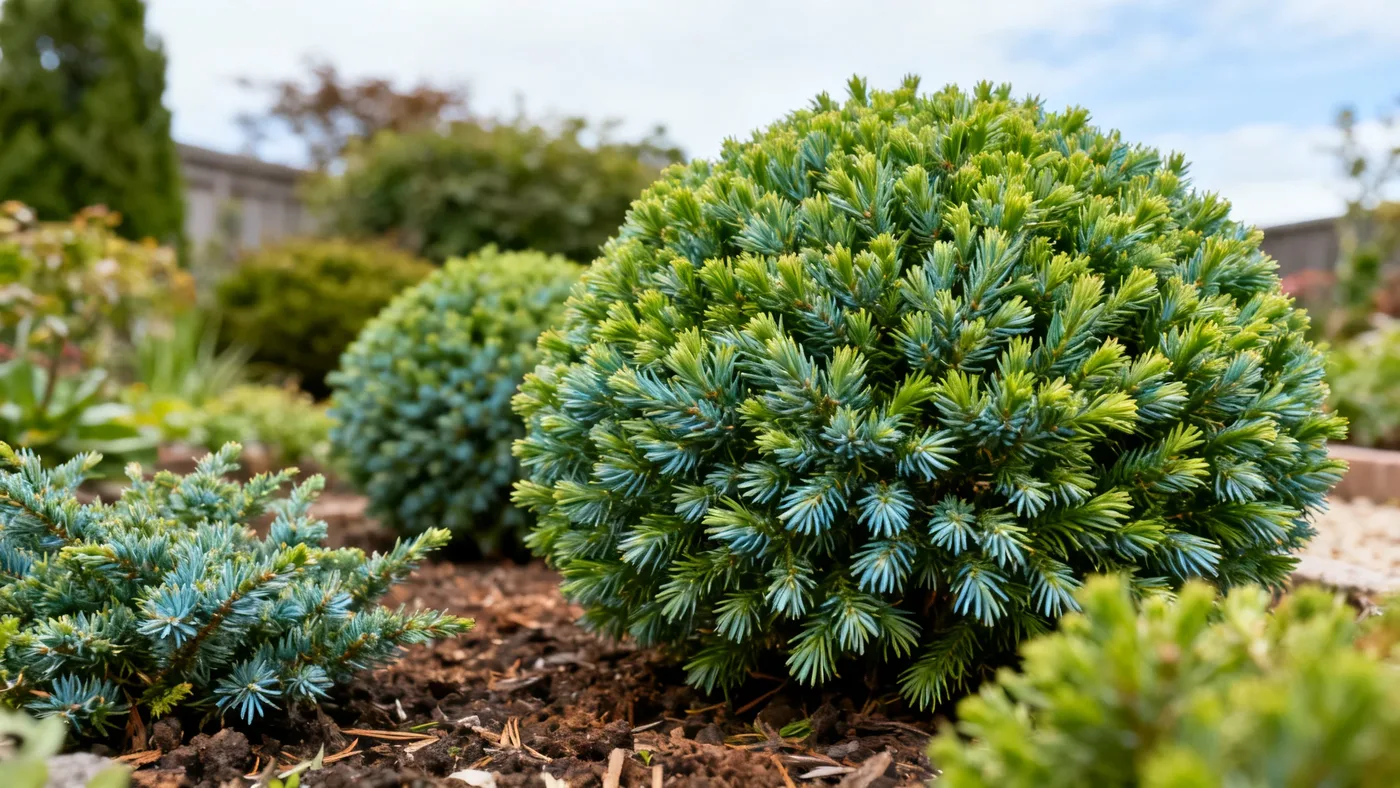
Do You Need to Fertilize Dwarf Japanese Cedar?
Dwarf Japanese Cedar is a slow grower by nature, expanding at roughly 3 to 6 inches per year. That slowness doesn't mean your plant is starving. In fact, many home gardeners over-fertilize these conifers, thinking more food will speed them up. It won't. What matters is matching your fertilizing strategy to the plant's actual needs and your soil's ability to feed it.
If you planted your Dwarf Japanese Cedar in rich, humus-amended soil, you may not need to fertilize at all. If your soil is lean or you want to support steady growth, a light annual feed in early spring is all this plant asks for. This guide walks you through the how, when, and why of fertilizing, plus what to watch for if you overdo it.
Does Dwarf Japanese Cedar Need Fertilizer?
The short answer: probably not as much as you think. Dwarf Japanese Cedar prefers moist, humus-rich, well-drained soil. If your planting site has good organic matter worked in at planting time, your plant can sustain itself for years without supplemental fertilizer.
Here's the reality check. This conifer is not a heavy feeder. It grows slowly on purpose, reaching mature heights of 3 to 6 feet and widths of 4 to 6 feet over a decade or more depending on the cultivar. Heavy fertilizing doesn't accelerate that timeline in a useful way. Instead, it can promote soft, leggy growth that loses the tight, rounded form you chose this plant for.
Fertilizer becomes useful in two specific situations. First, if you planted into poor, depleted, or sandy soil that lacks organic matter. Second, if you've owned your plant for several years and the soil nutrients have gradually been depleted. In both cases, a light annual application does help, particularly if you want to see visible growth year to year.
Dwarf Japanese Cedar grows in USDA zones 5 through 9. Check your zone and your local soil test results. If your region has acidic soils naturally, you're starting with a head start, since this plant prefers soil pH around 5.0 to 6.5.
Best Fertilizer for Dwarf Japanese Cedar
When fertilizing dwarf Japanese cedar, reach for an acid-formulated fertilizer designed for acid-loving plants. The type sold for azaleas and rhododendrons works perfectly. These fertilizers are formulated to match the plant's preference for acidic soil, and they provide nutrients in a gentler, slower-release form than general-purpose products.
Look for a balanced fertilizer. This means the three main numbers on the label (nitrogen, phosphorus, potassium) are roughly equal or close to it. A 10-10-10 or 12-12-12 analysis is ideal. Some gardeners prefer a slightly lower nitrogen ratio, like 8-8-8, which slows the push for vegetative growth and encourages steady form development instead.
Avoid these:
- High-nitrogen fertilizers meant for lawns. These promote fast, soft growth and can unbalance the tight mound form.
- Quick-release chemical fertilizers in excessive amounts. Light feeding means light feeding. One application per year, not monthly treatments.
- Products with herbicides or insecticides bundled in. You don't need them, and they complicate what should be a simple task.
Product forms that work well: granular acid-formulated fertilizer applied dry to the soil; liquid concentrates mixed to label strength and watered in; or slow-release pellets that feed over months. All three deliver the same message: a modest, steady nutrient supply.
When to Fertilize Dwarf Japanese Cedar
Timing matters more than you might expect. Early spring is the one time to fertilize dwarf Japanese cedar. Wait until new growth is beginning to flush, which varies by zone but typically falls in mid to late March in milder climates and mid to late April in cooler zones (5 and 6).
Why spring? Your plant is waking up and has the entire growing season ahead to use those nutrients. Fertilizing in summer or fall can push tender new growth just before cold weather arrives, which increases frost damage risk. Spring feeding gives the plant time to harden off any new tissue before winter stress hits.
Stick to one application per year. Once the fertilizer is down and watered in, you're done until next spring. Dwarf Japanese Cedar has no flowers to feed and no heavy fruiting to support, so multiple feedings don't pay dividends.
If you have a new, container-grown plant, hold off on extra fertilizer for the first year. Nursery soils are already amended. Let the plant settle into its landscape home. Spring of year two is when you start a light feeding routine, if soil tests or visible growth rates suggest you need to.
How to Fertilize Your Dwarf Japanese Cedar
Here's the step-by-step process. It takes minutes and only needs to happen once a year.
- Check your soil first. If you've never had a soil test, this is the moment. A local extension service can run one for a small fee. You'll learn your soil's pH, organic matter content, and nutrient levels. It takes the guesswork out of fertilizing and often saves money by showing you don't need to fertilize at all.
- Choose your acid-formulated product. Visit a nursery or garden center and ask for a fertilizer suitable for azaleas or rhododendrons in your preferred form (granular, liquid, or slow-release). Read the label to confirm it's balanced (roughly equal NPK numbers) and safe for evergreen shrubs and conifers.
- Measure the dose. Don't fertilize by guessing. Follow the label instructions exactly. Most acid-formulated granular fertilizers call for roughly 1 to 2 pounds per 100 square feet for light feeding. For a single shrub, that usually means a handful of granules, not a bucket's worth. When in doubt, go light.
- Apply in early spring. Wait for signs of new growth or budbreak on your plant. This typically occurs in late March or April, depending on your zone. Don't fertilize while the plant is dormant or during a hard freeze.
- Scatter the fertilizer evenly. If using granules, spread them in a light, even layer over the soil around the plant's base. Stay back a few inches from the main trunk to avoid direct contact with the stem. Cover the area roughly under the plant's canopy, where the root zone is most active.
- Water it in thoroughly. This is the critical step. Water deeply and slowly so the fertilizer dissolves and moves into the soil where roots can access it. Granules sitting dry on the surface don't help. Aim for at least 1 inch of water, either from rain or from your hose.
- Do not fertilize again until next spring. One application per growing season is sufficient and appropriate for this slow-growing conifer. Repeat feeding won't speed growth and may cause more harm than good.
Tips and Common Mistakes to Avoid
Mistake: Over-fertilizing because you think your plant looks slow. Dwarf Japanese Cedar grows 3 to 6 inches per year. That's normal. Pouring fertilizer on it won't double that rate. Your plant is working as designed. Patience is the fertilizer strategy that works here.
Mistake: Fertilizing newly planted shrubs. Nursery potting soil is already enriched. After planting, your tree has plenty of nutrients for its first year. Wait until year two to assess whether it needs a feeding.
Mistake: Applying fertilizer in late summer or fall. This can stimulate new growth right before cold weather, leading to frost damage and dieback. Spring is the only safe time.
Tip: Improve your soil instead. Rather than chase fertilizer applications year after year, add 1 to 2 inches of well-composted organic matter around the base each fall (not touching the trunk). Over time, this feeds the plant steadily and improves the soil structure your plant already loves.
Tip: Use mulch as a slow-release aid. A 2 to 3-inch layer of shredded bark or wood chip mulch over the root zone keeps soil cool, retains moisture, and slowly decomposes to add organic matter. This reduces the need for supplemental feeding.
Tip: Watch for signs of nutrient deficiency. If your plant yellows or shows unusually sparse growth despite being in the right light and moisture conditions, a soil test will confirm whether nutrients are the issue. Don't fertilize blind.
Expected results: After a spring feeding, you may see slightly more vigorous growth later in the season, but don't expect a dramatic difference. This plant's growth rate is determined by its genetics, not by fertilizer. What you should see is healthy, dense foliage; no yellowing or bleaching; and steady, season-appropriate development. If your plant looks good, it probably doesn't need feeding at all.
Quick Reference: Fertilizing Schedule and Checklist
| Task | Timing | Details |
|---|---|---|
| Soil test (optional but recommended) | Before planting or first year after planting | Contact local extension service for pH and nutrient analysis |
| Choose fertilizer | Early spring, before application | Acid-formulated (azalea/rhododendron type), balanced NPK (10-10-10 or similar) |
| Apply fertilizer | Early spring when new growth begins (late March to late April, zone-dependent) | Follow label dose; scatter evenly around plant base; water in thoroughly |
| Water in | Immediately after application | Apply at least 1 inch of water so fertilizer moves into the root zone |
| Next feeding | Following spring, same time | Do not re-fertilize within the same year; once annually is sufficient |
| Amend soil with compost | Fall (optional but beneficial) | Apply 1 to 2 inches of well-composted organic matter around base; avoid touching trunk |
For more complete care guidance, see the Dwarf Japanese Cedar care guide, which covers light, water, pruning, and pest management.