Dwarf Japanese Cedar Sun and Light Requirements Explained
Dwarf Japanese Cedar thrives in full sun to part shade, but the specifics matter. A shrub planted in the wrong light won't die outright in most climates, but you will notice slower growth, thinner foliage, or bronzing that signals stress. This guide walks you through assessing your yard's light, selecting the best spot for your cedar, and troubleshooting problems once it's in the ground.
Why Light Matters for Dwarf Japanese Cedar
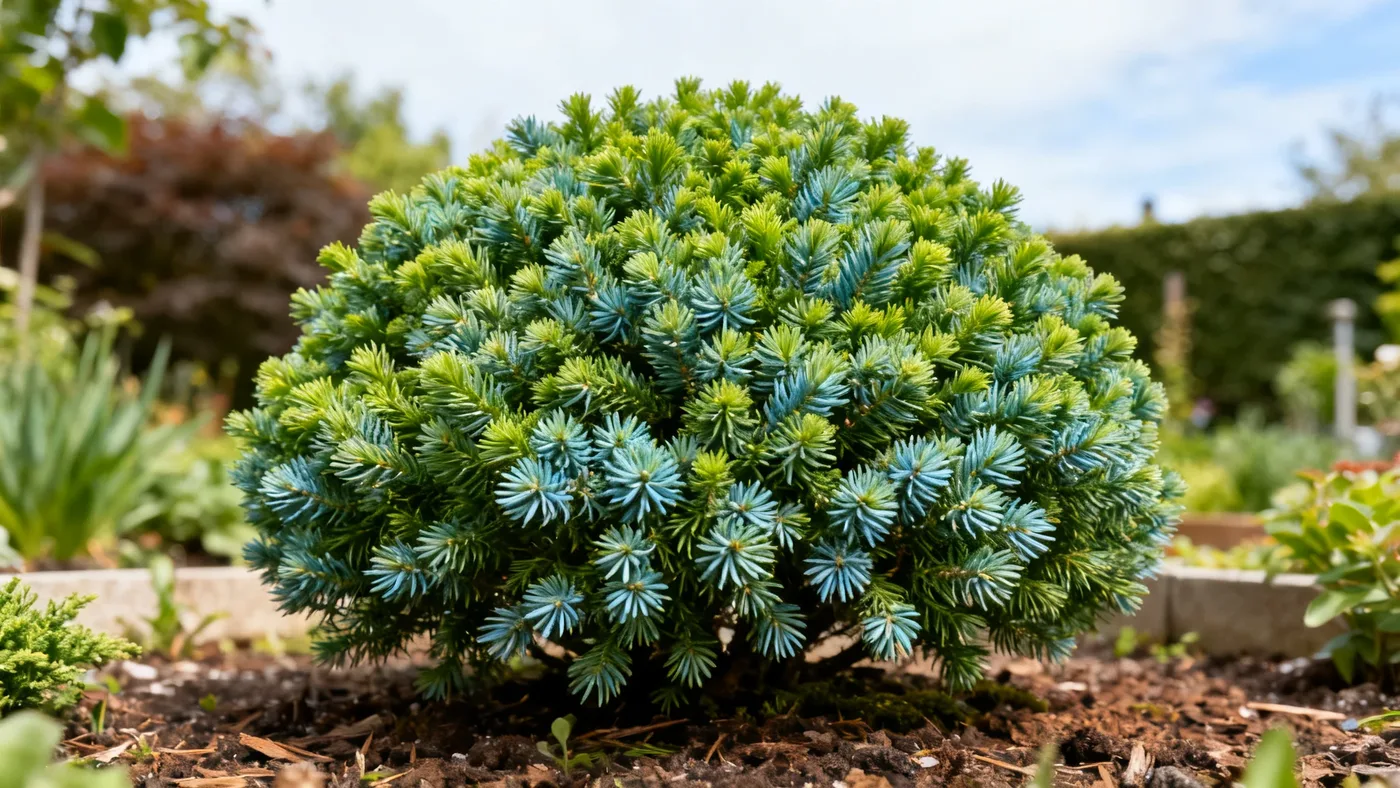
Dwarf Japanese Cedar is an evergreen conifer with soft, awl-shaped blue-green needles packed densely into a mounded globe shape. The foliage relies on consistent light to stay thick and colorful. In full sun, the plant grows as intended, compact and sturdy. In heavy shade, branches stretch and thin out, reaching for light. In the wrong climate (hot, dry zones), the afternoon sun can actually scorch the foliage, turning it brown or bleached.
The plant's slow growth rate of roughly 3 to 6 inches per year means every season counts. Poor light early on can set back your shrub by years. The good news: this is preventable with a careful site selection before you plant.
Understanding Sun Exposure Categories
Before you scout your yard, know what these terms mean in practice.
Full sun means at least 6 to 8 hours of direct sunlight per day, with at least 6 hours of consecutive morning or midday light. Morning sun is gentle and ideal. Afternoon sun is intense, especially in zones 8 to 9 or during summer heat waves.
Part shade (also called part sun) ranges from 3 to 6 hours of direct sun per day. The remainder of daylight hours is dappled or filtered light under trees, or shade cast by structures. This is often the goldilocks zone for Dwarf Japanese Cedar in hot climates.
Afternoon shade is the key factor in hot or dry climates (think USDA zones 8 to 9, or areas with sustained summer temperatures above 85 degrees Fahrenheit). Even in these zones, afternoon shade helps reduce foliage scorch, a bronze or sun-bleached discoloration that doesn't harm the plant but looks like damage.
Step-by-Step: Assess Your Yard's Light
Materials you'll need:
- A notebook or smartphone with a notes app
- Optional: a sun-tracking app or a compass
- Binoculars (to check canopy density of nearby trees)
Step 1: Pick your candidate planting site. Identify 2 to 3 spots in your yard where you're considering placing the cedar. It should be in a foundation bed, rock garden, or mixed shrub border where it has some visual prominence.
Step 2: Track direct sun exposure over two days. On a clear day, visit each spot at sunrise, mid-morning (around 9 am), noon, mid-afternoon (around 3 pm), and sunset. Mark whether the spot is in direct sun (the plant would receive unfiltered sunlight) or in shade at each time. Count the hours of direct sun. Repeat this on a day when clouds are minimal so you're not skewed by cloud cover.
Step 3: Note the direction the shade falls. If shade arrives in the afternoon, write down what's casting it: a neighboring tree, a structure, a tall fence. This tells you whether afternoon shade (helpful in hot zones) is a feature or a bug for your site.
Step 4: Check your USDA hardiness zone. Dwarf Japanese Cedar thrives in zones 5 to 9. If you're in zones 8 to 9, afternoon shade is a strong plus. If you're in zones 5 to 7, full sun is ideal. (Check your zone via the USDA Plant Hardiness Zone Map if you don't know it.)
Step 5: Assess soil moisture at each spot. In your hours of observation, note whether the soil stays moist or dries out quickly. This isn't strictly a light question, but full-sun spots tend to dry out faster, and you'll want consistently moist soil during the cedar's establishment. If a full-sun spot dries to dust by mid-July, it's a risky home for a young cedar unless you plan to water deeply twice a week.
Choosing the Best Spot
In zones 5 to 7 (cool to moderate climates): Prioritize full sun with a minimum of 6 hours of direct light. Morning sun is best. Afternoon shade is acceptable but not necessary. Ensure the spot drains well and soil stays moist.
In zones 8 to 9 (warm to hot): Aim for 4 to 6 hours of sun, with afternoon shade a major advantage. A location that gets strong morning or midday sun but is shaded by a tree canopy or structure starting around 2 pm is nearly ideal. This gives the plant the light it needs to stay compact without the harsh afternoon heat that causes foliage scorch.
In all zones: Avoid deep shade (less than 3 hours of sun). The shrub may survive, but growth slows dramatically, foliage thins, and the dense globe form opens up. It's not worth the compromise.
Light Needs During Year One and Beyond
A newly planted Dwarf Japanese Cedar is especially sensitive to light stress in its first growing season. The root system is small and cannot support a dehydrated canopy. In bright locations, make sure you're watering deeply and consistently (soil consistently moist, not soggy). In partial shade, be even more cautious: damp soil and low light can invite root rot.
After the first year, once roots are established, the plant tolerates its site better. By year three, you'll see the mature growth habit emerge: dense, rounded, and compact in adequate light, or looser and lighter in insufficient light.
Troubleshooting Common Light-Related Problems
Problem: Foliage is turning brown or bleached. This is usually foliage scorch from intense afternoon sun combined with dry soil or wind exposure. It's most common in zones 8 to 9 or during heat waves. The plant is not dying, but the appearance is off. Solution: Add afternoon shade (plant a taller deciduous shrub to the west, or install a shade cloth for the hottest weeks). Increase watering depth. The foliage will gradually return to green as new growth emerges in cooler months.
Problem: The shrub looks thin and sprawly, not compact. This signals insufficient light. The branches are reaching for sunlight and not filling in. If the site receives fewer than 4 hours of direct sun, consider relocating the plant in late winter before growth flushes (zones 5-7) or in early fall (zones 8-9), allowing roots to establish before temperature extremes. Alternatively, if you must keep it in place, prune lightly to promote bushiness and accept that the form won't be as dense.
Problem: Lower branches are dying or losing needles while the top thrives. This is often shade from an adjacent structure or tree canopy growing taller. If the spot now receives less light than when you planted, it may eventually need relocation. Monitor the canopy of nearby trees, especially in late spring when leaves fully emerge.
Problem: The shrub seems perfectly sited but turns bronze or purple in winter. This is a normal seasonal color shift, not a light problem. Dwarf Japanese Cedar's foliage often takes on a bronze or purple cast in cold winter weather, then greens back up in spring. This is attractive and indicates the plant is hardened off properly.
Common Mistakes to Avoid
Underestimating afternoon heat in zones 8 to 9. Many gardeners assume "full sun" is always best for evergreens. In hot climates, afternoon shade is often the difference between a healthy shrub and one that scars seasonally.
Planting too close to tall structures. If you tuck a Dwarf Japanese Cedar against the north or east side of a house for shelter, you may inadvertently create heavy shade as the sun's angle changes with seasons. This sounds protective but often leaves the plant in 2 to 3 hours of sun, which is too little.
Confusing slow growth with poor light. Dwarf Japanese Cedar naturally grows slowly (3 to 6 inches per year). Don't assume a slowly growing plant is light-starved. If the foliage is dense and colorful, the light is adequate.
Moving the plant repeatedly to find the "perfect" spot. Each transplant stresses the shrub and sets it back 6 to 12 months. Do the homework on sun exposure before planting, not after.
Expected Results
When sited correctly for your zone, Dwarf Japanese Cedar should display a tight, mounded form with dense blue-green or green foliage. Growth will be slow but steady, roughly 3 to 6 inches per year. The shrub will reach 3 to 6 feet tall and wide (varying by cultivar and age), forming an attractive evergreen specimen. Winter bronzing is normal and not a sign of distress. Foliage scorch or sparse growth indicates a light mismatch that may need correction.
Quick Reference: Sun and Light Checklist
| Light Condition | Daily Sun Hours | Best For | Notes |
|---|---|---|---|
| Full sun | 6 to 8+ hours | Zones 5 to 7; cool/moderate climates | Ideal for compact form and vibrant color; ensure consistent moisture |
| Part shade (morning sun + afternoon shade) | 4 to 6 hours | Zones 8 to 9; hot/dry areas | Prevents foliage scorch; still delivers adequate light for dense growth |
| Afternoon shade critical | Minimum 4 hours (mostly morning/midday) | Heat-stressed zones; summer temps above 85 degrees F | Reduces bronzing and sun bleach; watch for excessive moisture in shade |
| Heavy shade | Fewer than 3 hours | NOT recommended | Plant will thin, slow dramatically, or decline over time |
For more details on overall care, including watering, soil, and seasonal maintenance, see our complete Dwarf Japanese Cedar care guide.