Is Golden Promise the Same as Dwarf Japanese Cedar?
Picture a late-afternoon garden where one low shrub glows like a lit lamp while its neighbors stay cool and dark. That shrub is often Golden Promise, and the common belief is that it is simply the gold version of the dwarf Japanese cedar you already know, a color swap you can drop into the same spot. What we see in practice is different. The two share a species, but they ask different things of a site, and the gold is the first thing to go when the site is wrong.
In this article, we'll go through where the Golden Promise name came from, how the gold foliage works, how much light it needs to keep its color, and where to place it so it shows. Done well, you get a small mound that lights up its corner all year. Done badly, you get a green shrub wearing a gold plant's tag.
Where the Name Golden Promise Came From
Golden Promise is a named selection of Cryptomeria japonica, which makes it a close relative of every dwarf Japanese cedar in the trade and a different plant from the one most shoppers picture. It is a dwarf, rounded evergreen conifer. We looked for the raiser and the year it was introduced in the sources available to us, and none records them, so we will not make up a story for you.
A Name That Describes the Color
On the tag, the name does its job. "Golden" is what the plant was selected for, pale yellow to gold foliage where its relatives carry blue-green. "Promise" is our reading of it: the color is a promise the plant keeps only when the site lets it. That is not a documented origin for the word, but it matches how the plant behaves once it is in the ground.
Why the Label Matters
The trade is loose with names. Unnamed dwarf globe forms are often sold under the Globosa Nana label, and a tag that says only "dwarf Japanese cedar" can mean a blue-green plant or a gold one. Ask for the cultivar name and check it before you plant. Our comparison of dwarf Japanese cedar cultivars shows how the named forms differ. Every plant we grow goes out under its cultivar name, so what is on the tag is what lands in your bed.
Globosa Nana Set the Blue-Green Standard
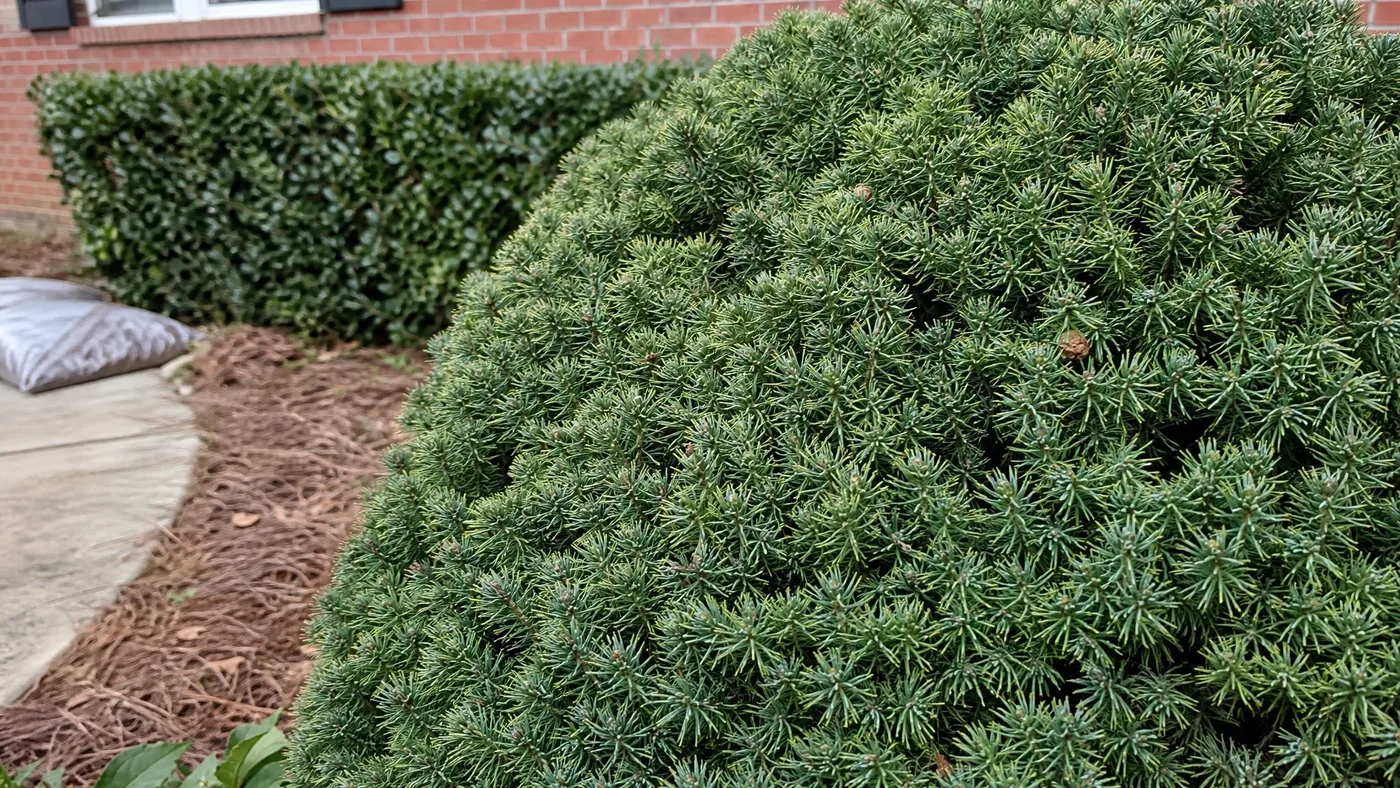
Most people who say "dwarf Japanese cedar" mean Globosa Nana, and it earned that place by being easy to read. It is a slow-growing, rounded dome with bluish-green, awl-shaped needles that turn rusty-red in winter. It tops out at 2 to 4 feet tall and 3 to 4 feet wide, and its naturally rounded habit needs no maintenance to keep its form. That is a calm, dependable shape, and it is the baseline we measure every other dwarf cedar against.
What Makes It so Forgiving
Globosa Nana performs best in full sun to partial shade, in moist, well-drained soil of any texture and pH. That range is wide. You can put it on the east side of a house, under a high canopy, or in an open bed, and the needles are bluish-green in the growing season but turn rusty-red or bronze in winter, whatever the site. The same source calls the shrub resistant to deer, heat and salt, which is why it shows up in so many foundation plantings.
How Far From the Species It Sits
The species is a different animal. The full-size Japanese cedar reaches 50 to 70 feet tall and 20 to 30 feet wide, and NC State lists it for zones 5a through 9b, while its listing for Globosa Nana runs 6a to 9b with 8b missing. Both dwarfs are tiny by comparison. Our guide on how big dwarf Japanese cedar gets covers the growth side in detail.
How Dwarf Japanese Cedar Turned Gold
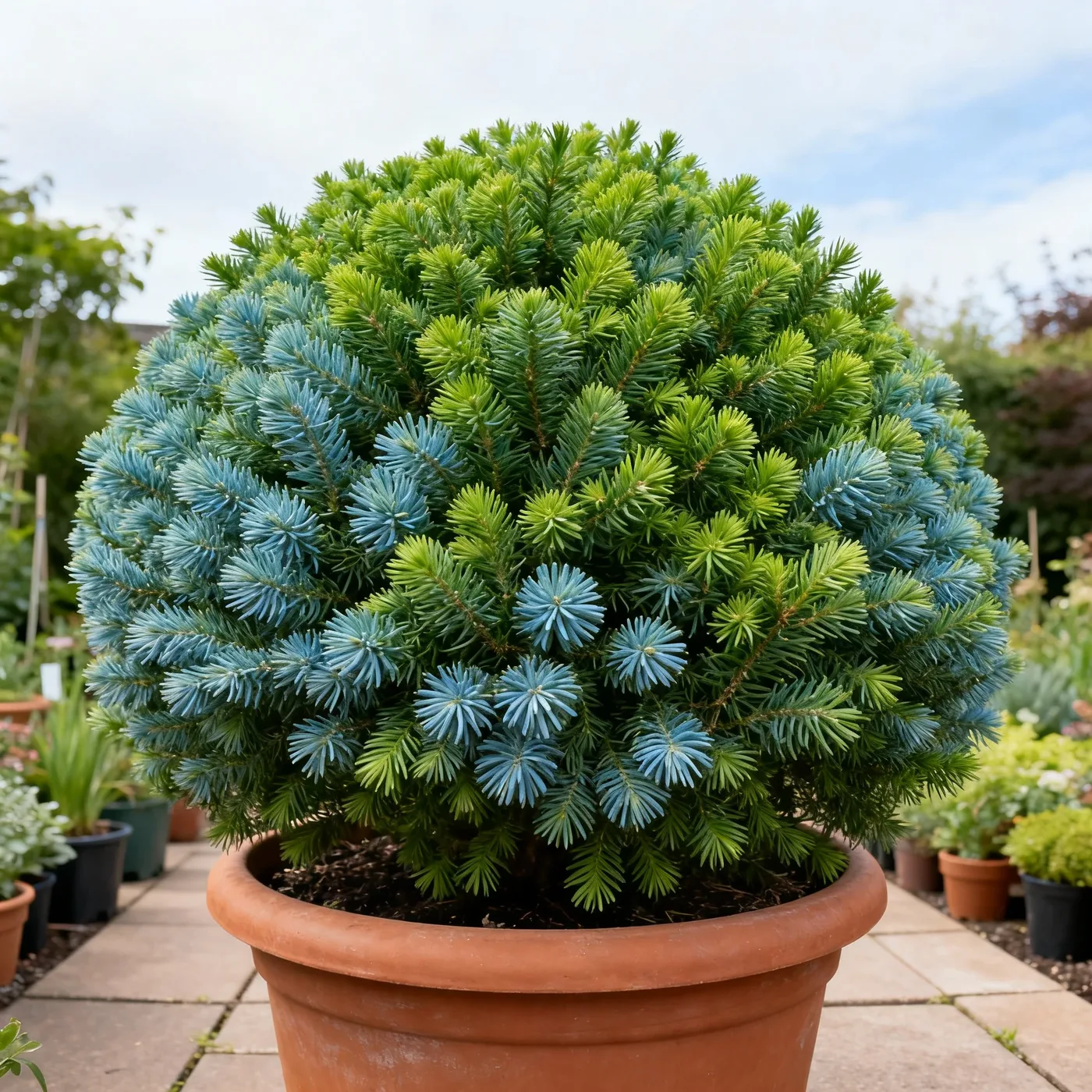
The gold is a cultivar trait, not a different species and not something you add with feeding or a special soil. Golden Promise has the same needle-bearing evergreen character as the blue-green forms, with a different color set. It shows pale yellow foliage in spring and a reddish-purple tinge in winter. In the trade you will also see the new growth described as chartreuse moving toward gold, and that matches how the plant behaves as a season unfolds.
The Color Through the Year
Spring is the brightest chapter, when fresh growth comes in pale and almost lemony against last year's older, deeper foliage. Through summer the best-sited plants settle into a warmer gold. In cold weather the whole mound takes on that reddish-purple cast, which looks lovely against snow or bare gray branches. Globosa Nana has its own winter shift, the rusty red, so both plants change color when it turns cold. Gold simply gives you a different starting point.
Size and Habit
Golden Promise is a dwarf, rounded conifer like its blue-green cousin. Its maximum height is 0.5 to 1 meter, which is about 20 to 40 inches. That is a British figure from a cooler climate, and Globosa Nana is listed at 2 to 4 feet in North Carolina, so we would plan for a similar low mound and check with your local extension service. Customers usually ask us whether the winter purple means the plant is struggling. It does not. That is the cultivar's normal winter dress.
Light Decides How Gold a Dwarf Japanese Cedar Stays
Full sun is where Golden Promise earns its name, and it is the point that matters most when you choose a site. The species as a whole prefers full sun and tolerates some partial shade, which tells you the plant will live in less light. The gold is another matter. The color holds best with direct sun for much of the day and drifts toward green as the light thins. Globosa Nana keeps its blue-green in partial shade, so the two plants should not be treated as interchangeable.
Choosing a Spot
Walk the site at the hours you actually use it. A bed that gets sun until early afternoon and then goes into building shade is the borderline case, because the shrub will look fine in May and washed out by August. Our sun and light requirements guide walks through reading a site hour by hour. Give the gold the brightest corner and put the blue-green plant in whatever shade is left.
Keeping Sun-Baked Roots Healthy
More sun means more drying out, and the sources do not agree on how much the plant minds. Globosa Nana resists drought and dry soil, while the Arkansas Extension says the species lacks drought tolerance. Our advice is to water new plants steadily and keep the soil moist but never soggy. Golden Promise may be susceptible to Phytophthora root rot, so good drainage is not optional.
Placing Golden Promise Against Dark Backdrops
Gold needs a dark neighbor to look like gold. Against a pale fence or a bed of other yellow-green foliage, the shrub reads as merely bright. Put it in front of deep green evergreens, a dark-stained fence, or a wall in shadow, and it behaves like a lamp left on at dusk. The contrast does the work that no amount of fertilizer or pruning can, and it costs nothing but a little planning on paper before you dig.
Backdrop Choices
Dark conifers behind the gold are the classic answer, and dark mulch under it helps too. A line of blue-green plants works well because the cool and warm colors push each other forward. Keep the dark backdrop on the side that does not shade the gold, so the light reaches the shrub from the front. Our list of landscape uses and companion plants for dwarf Japanese cedar gives plenty of partners to pull from.
Scale and Spacing
A mound of 20 to 40 inches belongs at the front of a border, near a path, or beside steps, where you look down on it and the color catches your eye at close range. Leave it room to round out, roughly the 3 to 4 feet of width that Globosa Nana reaches, and check your tag for the grown size of the plant you buy. Pushed against a taller shrub, the gold loses both its light and its silhouette.
Dwarf Japanese Cedar in Afternoon Shade Fades Green
When the sun leaves a Golden Promise early, the first sign is in the new growth. Tips that should come in pale yellow arrive greener, and by midsummer the whole mound has shifted toward a plain yellow-green. The plant is not sick. It is simply responding to light, and a fade like that rarely comes with any needle drop or dieback. It is a reason to rethink the spot, not a reason to treat the shrub.
Reading the Fade
Check the color at the tips against the older inner foliage. If the difference is shrinking year over year, the site is too shady, and a tree or building may have grown into the light since you planted. Browning, thinning or soft, wet roots are another problem entirely, and Phytophthora root rot and, rarely, honey fungus are the concerns for this cultivar. Fade alone means light.
Your Options
You have two honest choices. Move the plant while it is still young and small, following our guide to transplanting an established dwarf Japanese cedar, or accept a green shrub there and plant a blue-green Globosa Nana in that spot instead, since it holds its color in partial shade. One of the most common questions we get is whether pruning can bring the gold back. It cannot, because the limit is light.
One Dwarf Japanese Cedar Family, Two Moods of Color
So, is Golden Promise the same as dwarf Japanese cedar? It is the same family and a different plant. Both are slow, rounded dwarfs of Cryptomeria japonica, and both turn warm in winter. Globosa Nana is the steady blue-green workhorse that takes full sun or partial shade. Golden Promise is the bright accent that needs sun and a dark backdrop to hold its color. Choose by site first, then by mood.
Dwarf Japanese Cedar
Nursery-grown Dwarf Japanese Cedar in sizes from 1 Gallon, shipped to your door.
From $39.97
Shop Now →Our Dwarf Japanese Cedars, Golden Promise and Globosa Nana included, are raised in farm beds with bright sun, a touch of shade at the edges, and soil that holds moisture while the extra water runs off. Everything else we sell is grown on those same farms too, each tree, shrub, grass and plant of top quality. If this guide helped you settle on the right cedar for your site, browse what is in stock now and find your match.