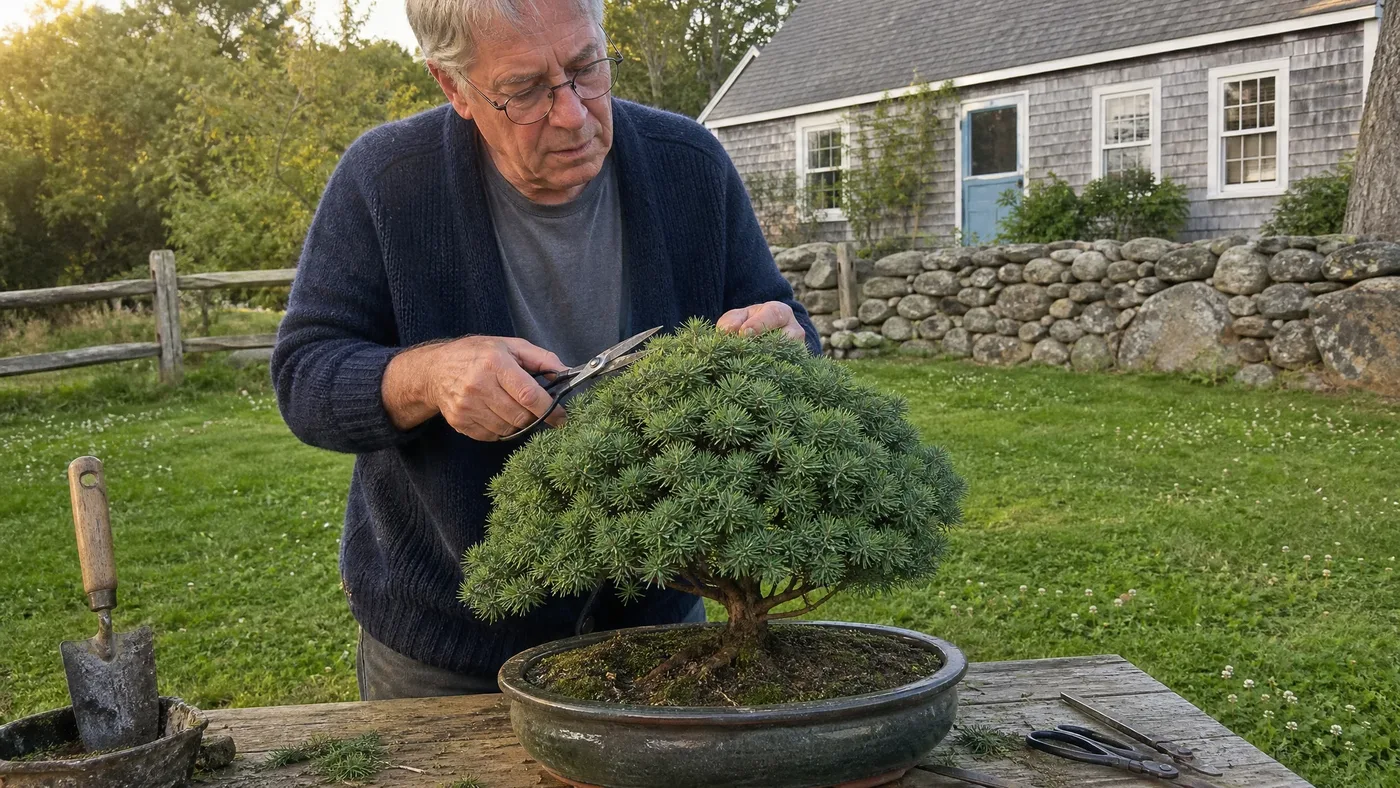
How to Grow Dwarf Japanese Cedar as a Bonsai Tree
Two to four feet is how tall this cultivar grows in the ground, with a width of 3 to 4 feet. That ceiling is why it suits bonsai. A shoot tip forks, each fork forks again, and within a few seasons one tip has become a tight green sphere. Your job is to keep that sphere dense and let the roots set the pace.
This article talks about how the dome forms, how roots set the repotting schedule, where to pinch and wire, and how to keep the tree small for decades, and answers the questions customers ask us most. Read on to learn what to cut, what to leave alone and when to do each.
Done badly, the tree loses its inner foliage and the globe hollows out into a shell. Done well, you get a dense cloud of needles that turns rusty-red in winter.
How a Dwarf Japanese Cedar Builds Its Globe From Dense Shoots
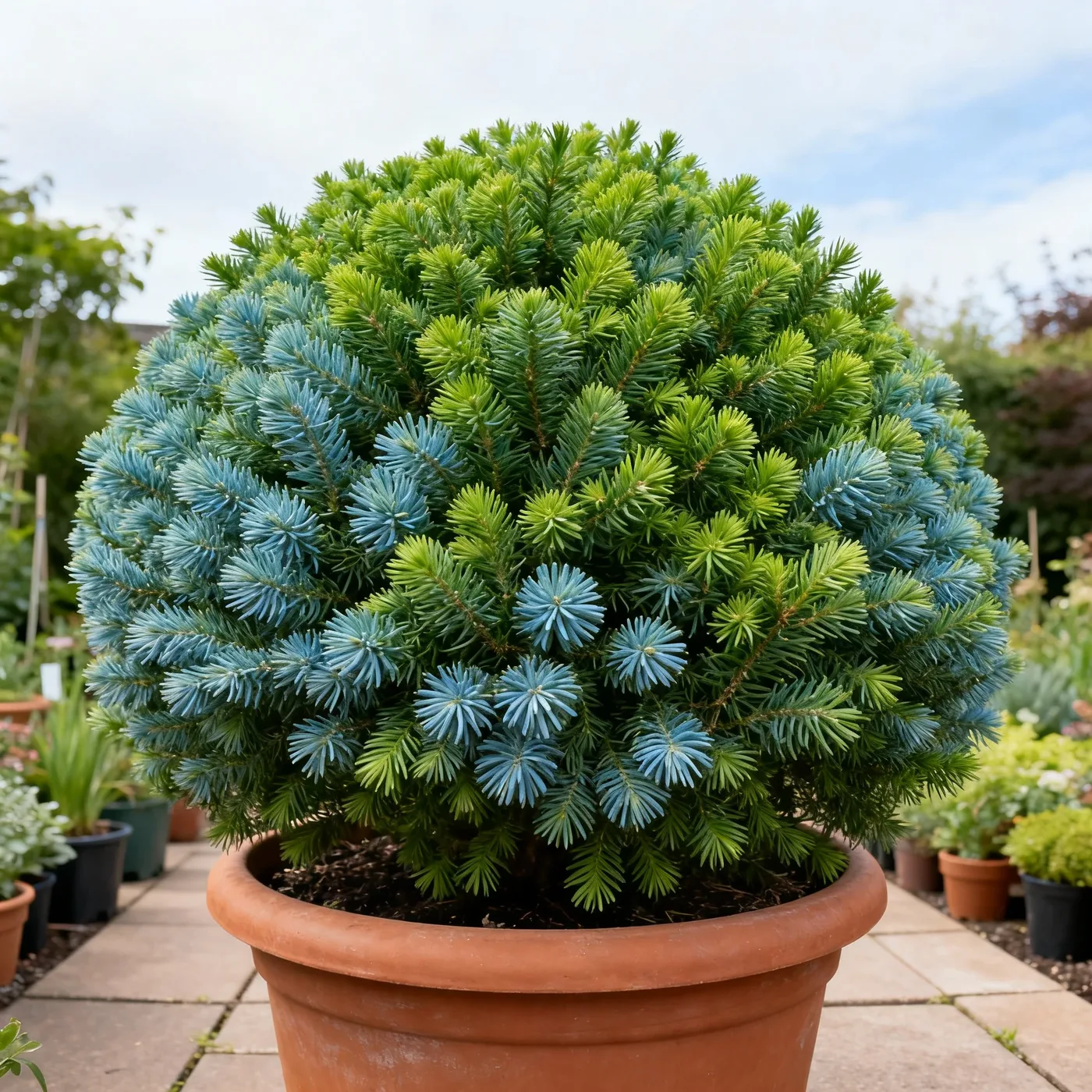
The species is a 50 to 70 foot timber tree with one dominant leader. 'Globosa Nana' has lost that habit. Each shoot tip makes a short extension and then branches again before it can run. Short internodes and constant forking pack the foliage into a ball. The awl-shaped needles spiral tightly around each shoot, and they are bluish-green, turning rusty-red during winter. Do not mistake that winter color for dieback.
This habit is built in, which is why the common advice to "build the shape from scratch" does not fit this tree. The dome is your starting point. You are keeping a form, and where you want a more refined image, you open it up with selective thinning and a little wire.
Growth is slow. In a pot, that slowness works for you. A cut you make today will still be visible three seasons from now, so make each one on purpose.
Check the tag before you start. Trade sellers often label any dwarf globe form as 'Globosa Nana', and a looser plant grows longer shoots and loses its sphere faster. Ours are grown in containers, so the root mass you start with is already compact and easy to work.
Why Dwarf Japanese Cedar Roots Set the Repotting Pace
Top growth and root growth move together. A slow shrub makes slow roots, so a bonsai pot fills far more gradually than it would with a vigorous pine. Plan on repotting every second spring, not every year. Annual repotting forces a tree that is not ready and costs you foliage density for no gain.
Read the roots before you commit. Slide the tree out of its pot in early spring, before the buds swell. If the soil holds its shape and fine white roots circle the outside of the root ball, it is a repotting year. If the soil falls apart and only a few roots show, put the tree back and wait twelve months.
The cultivar tolerates a snug root run, and that snugness is part of what holds the globe small. A root-bound tree shows pale, thin growth at the tips and drains slowly after watering. A tree with too much room makes long, loose shoots that break the sphere. Both problems are fixed at the root, not with the shears.
Our container guide covers general pot culture, including drainage and feeding. This guide picks up where that one stops, at the bonsai pot.
Rule for the bench: look every spring, repot every second one.
Reading Where Dwarf Japanese Cedar Buds and Backbuds Will Break
Pruning works only where the tree can respond. Cut in the wrong place and you leave a bare stub that stays bare. Learn where buds come from before you pick up the scissors.
Where New Shoots Emerge
New growth comes from the green, needled shoots. Each needle cluster carries a bud at its base, and the shoot tips push the strongest extension. Old brown wood with no needles rarely produces anything new. In our rows, the most common loss we see is a customer cutting back to bare wood and waiting years for growth that never arrives.
Backbuds are the small buds on older, inner shoots. They break only when light reaches them. A globe that has closed over its own interior shades those buds, and they go dormant and then die. Opening the canopy keeps them alive, so thin before the center goes dark, not after.
Where to Pinch and Where to Cut
Pinch new shoot tips with your fingers and leave a few needle clusters behind. Use shears only to remove a whole shoot back to a fork that still carries foliage. Never slice through a needled shoot and leave a bare end. Our pruning guide for garden plants covers timing in the landscape. For bonsai the rule is tighter: every cut must leave green behind it.
Many bonsai texts say to cut hard to force backbuds. We do not follow that with this cultivar. It backbuds only where it still has foliage and light, so thin gently and keep each cut small.
Choosing Shallow Pots and Gritty Bonsai Soil
The root system is fine and fibrous, so it does well in a shallow pot. Pick a pot with large drainage holes, cover them with mesh, and add tie-down holes for wire. Choose a pot wide enough that the canopy looks balanced above it and deep enough to hold a root ball you can lift out whole. Unglazed pots lose more water, which helps in wet climates. Glazed pots hold more, which helps in hot ones.
The Soil Mix
The soil must drain fast and still hold some moisture. The cultivar grows in moist, well-drained soil of any texture and pH, so you have room to adjust. The species is the fussier one and prefers acidic soil, but you do not need to chase an acidic reading with this cultivar. Make coarse inorganic grit, such as pumice, lava rock or crushed granite, the bulk of the mix. Add a smaller share of fine bark for moisture. Sift out the dust, because fines clog the pot and rot the roots.
Do not run the mix too dry. A thin container dries out hard in summer. Our soil guide covers the in-ground side of this question.
Siting the Pot
Give the pot a sheltered spot out of drying wind, in full sun to partial shade. Water when the top of the soil begins to dry, and soak until water runs from the holes.
Wiring Branches Without Snapping the Brittle Wood
The wood of this tree is stiff and breaks before it bends. Wiring is possible, but go slowly, use fine wire and accept small movements. Treat wire as a way to nudge a branch, not to force it.
Wire Size and Timing
Choose the thinnest wire that holds the branch in its new position. Anodized aluminum is the usual choice because it is soft and easy to apply. A local bonsai club can help you match gauge to branch thickness, and a trial on a spare shoot costs nothing. Wire when the tree is not in a flush of fast growth. Wire cuts into bark quickly during active growth, so check it every few weeks and remove it before it bites.
Bend Limits
Apply wire at a gentle angle and move each branch only a short distance at a time. If you hear a crack or see the bark lift, stop. Support the branch with one hand under the bend and anchor the wire at the trunk or a neighboring branch. Small adjustments across several seasons work far better than one dramatic curve.
Do not unwind old wire. Cut it off in short sections so you do not drag needles with it. A branch that has set will hold its position for a season or two without wire.
Root-Pruning a Dwarf Japanese Cedar Every Second Spring
Root-pruning keeps the tree in its pot without letting it choke. Work every second spring, as the buds begin to swell. A tree repotted at the right time recovers in weeks. One repotted in the middle of summer often sulks for a season. We do not give a percentage here, because a safe share depends on how dense your roots are. Take less than you think you need, then compare notes with a local bonsai society.
The Steps
Follow this order, and do not skip the soil sifting.
- Water the tree the day before so the roots are supple.
- Slide the root ball out and comb the outer soil away with a root hook.
- Cut off the circling roots and trim the outer edge, taking only a modest share of the mass.
- Keep the finer roots near the trunk, and keep the root ball damp throughout.
- Set the tree in fresh gritty mix, wire it down through the holes, and water well.
Never strip the tree bare. Leave more fine root than feels necessary, because a slow grower rebuilds roots slowly.
Aftercare
Keep the repotted tree out of direct afternoon sun and wind for a few weeks. Water when the surface dries, not on a fixed schedule. Hold off on fertilizer until you see new growth, then follow the fertilizing guide. Do not prune the top in the same season. One stress at a time.
Keeping a Bonsai Dwarf Japanese Cedar Compact for Decades
A tight globe depends on small, regular jobs, not big ones. Customers often ask us how to stop the sphere from going leggy, and the answer is the same every time. Pinch often, thin lightly, keep the roots snug and give the tree light. The table sets out the yearly routine. Treat it as a sequence, not a strict calendar, and adjust for your climate.
| Time of year | Job | Why |
|---|---|---|
| Early spring | Check roots, repot in a root-pruning year | Roots regrow fastest as buds swell |
| Spring flush | Pinch new tips and thin crowded shoots | Keeps backbuds lit and the dome dense |
| Summer | Water carefully and check wire | Shallow pots dry quickly and wire bites in growth |
| Autumn | Light tidy and remove dead needles | Clears debris before winter damp |
| Winter | Shelter the pot and leave the color alone | Roots in a small pot are exposed to cold |
Water matters more than people expect. The sources disagree on drought. NC State calls the cultivar drought resistant, while Arkansas Extension says the species lacks drought tolerance. In a shallow bonsai pot, side with caution and never let the root ball dry out.
Cold is the other pot-specific risk. The cultivar grows in zones 6a to 9b, but roots in a small pot are far more exposed than roots in the ground. Our winter care guide covers protection.
Pests are few. Clemson calls the species typically insect-free but possibly prone to leaf blights, so give the tree airflow and avoid crowding it on the bench.
What a Well-Kept Dwarf Japanese Cedar Bonsai Asks of You
The globe forms itself, the roots set the schedule, and you cut only where there is green behind the cut. Wire gently, use gritty soil in a shallow pot, and keep the work small and regular. A tree kept this way stays far below the species' timber size and holds its shape year after year.
Dwarf Japanese Cedar
Nursery-grown Dwarf Japanese Cedar in sizes from 1 Gallon, shipped to your door.
From $39.97
Shop Now →Bonsai is slow work, and it rewards a tree that started well. Ours are raised in farm beds with full sun to light shade, where the soil holds moisture yet drains freely. Every plant we sell is grown on our own farms, so each tree and shrub is top quality, and if you would like a Dwarf Japanese Cedar to train over the years, browse what is in stock now.