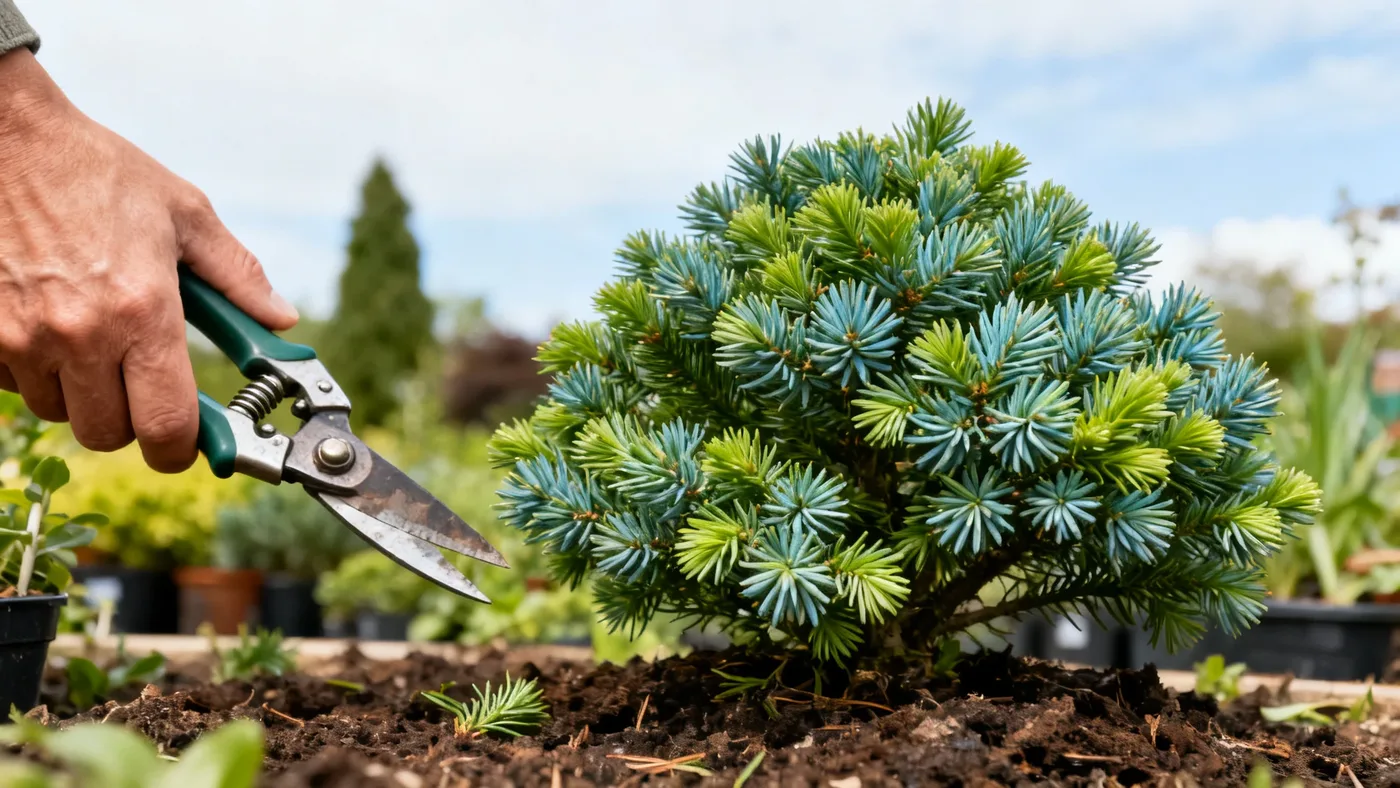
How and When to Prune Dwarf Japanese Cedar Shrubs
Dwarf Japanese Cedar (Cryptomeria japonica 'Globosa Nana') is one of the easiest shrubs to maintain when it comes to pruning. This conifer naturally forms a dense, rounded mound and grows slowly, roughly 3 to 6 inches per year, so it rarely needs heavy cutting. However, understanding the right timing, technique, and limits of pruning will help you keep your shrub healthy and shapely for decades.
When to Prune Dwarf Japanese Cedar
Timing is critical for this plant. The best window for pruning is late winter to early spring, before new growth flushes. In USDA zones 5 to 9, that typically means February through early April, depending on your location. Pruning during this window allows the plant to direct energy into new shoots right as they emerge.
Avoid pruning in fall or late summer. Cutting at these times stimulates tender new growth that can be damaged by cold weather, particularly in colder zones. Winter pruning also lets you see the shrub's framework more clearly, since the foliage is less dense than it will be after the spring flush.
If you notice broken or diseased branches any time of year, remove them immediately, regardless of season. This is the one exception to the spring-only rule.
Why Dwarf Japanese Cedar Requires Minimal Pruning
The "dwarf" in the name is important context. This cultivar is bred to stay compact and naturally forms that tight, rounded globe without aggressive cutting. Mature specimens reach 3 to 6 feet in height and 4 to 6 feet wide, and their dense whorled foliage naturally fills in any gaps.
Unlike deciduous shrubs that regenerate easily from old wood, Dwarf Japanese Cedar has a critical limitation: it does not reliably resprout from bare, mature wood. If you cut back into wood that has no green foliage on it, that branch may simply die and leave a permanent bare patch. This is why light, frequent maintenance pruning is far better than occasional heavy cutbacks.
Think of it as guidance rather than correction. Small trims done every year or two keep the plant shaped without risk. Trying to rejuvenate a leggy or overgrown specimen by cutting it hard is rarely successful and often results in permanent damage.
Tools and Materials You'll Need
Pruning Dwarf Japanese Cedar does not require a large toolkit. Keep these items on hand:
- Hand pruners (bypass type, sharp): for branches up to 1/4 inch diameter
- Loppers: for branches 1/4 to 1/2 inch diameter
- Pruning saw (folding or straight): for thicker branches or interior growth
- Leather gloves: the foliage is soft but dense, and needles can irritate skin
- Rubbing alcohol or 10% bleach solution: for sanitizing tool blades between cuts
- Clean cloth or paper towels: for wiping blades
- Sturdy trash bag or tarp: for collecting clippings
Before you start, clean your tool blades with rubbing alcohol. This prevents spreading fungal spores or insects from other plants.
Step-by-Step Pruning Instructions
Follow these steps to prune your Dwarf Japanese Cedar safely and effectively:
- Assess the shrub first. Walk around your plant and identify branches that are crossing, rubbing against each other, dead, or growing awkwardly outward from the natural mound shape. Mark them mentally or with a ribbon tied loosely around them. The goal is to remove no more than 10 to 15 percent of the foliage in any single year.
- Start with the dead or damaged wood. Cut out any branches showing dieback, disease, or insect damage. Make your cut just above the branch collar (the slight swelling where the branch joins the trunk or larger branch). Do not leave a stub, but do not cut flush into the main stem either. A slight angle helps water shed away from the wound.
- Remove crossing branches. If two branches are rubbing or crossing tightly, remove the weaker or less attractive one. Again, cut at the branch collar. This step improves air circulation inside the shrub and reduces disease pressure.
- Thin the interior if needed. For shrubs over 10 years old or those in humid climates prone to fungal issues, you can carefully remove some interior twigs to improve air flow. Work from inside the shrub outward, and make sure every cut is made to a visible green shoot or branch. Never leave bare stubs inside.
- Shape the perimeter lightly. If the shrub has become uneven or has branches extending beyond the natural mound, use hand pruners to trim back the long tips. Cut just above a healthy side shoot if possible. This encourages branching at that point and maintains the dense form. On very formal plantings, you can lightly shear the exterior with hedge shears, but avoid heavy shearing, which can expose interior wood and looks unnatural.
- Step back frequently. After every few cuts, step back and view the shrub from 4 to 6 feet away. It is easy to overcorrect, so frequent perspective checks prevent you from removing too much.
- Clean up promptly. Collect clippings into a bag as you work. The soft needles break down quickly in compost or yard waste bins.
Common Mistakes to Avoid
Cutting into bare wood. This is the most damaging error. If you cut a branch back to a point with no green foliage, that branch will likely not resprout. Always cut to a point where you can see active green growth or a side shoot coming off.
Over-pruning in a single season. Removing more than 15 percent of the plant's foliage in one year stresses it and can lead to dieback or disease. Dwarf Japanese Cedar is slow-growing, so it heals slowly. Patience pays off.
Pruning in fall or late summer. New growth triggered by late-season pruning is vulnerable to frost, especially in zones 5 and 6. Always wait for late winter or early spring.
Ignoring winter bronzing. The foliage often takes on a bronze or purple cast in cold winter weather. This is normal and seasonal. It is not dieback or disease, and you do not need to prune it. The color will green back up in spring.
Using dull tools. Dull pruners crush and tear foliage, opening wounds to infection. Keep blades sharp and sanitize between cuts, especially if you are moving between multiple shrubs.
Expected Results and Timeline
After pruning, you should see new growth begin within 3 to 4 weeks, assuming you pruned in late winter or early spring. New shoots emerge from just below your cuts and from lateral buds along remaining branches, filling in the pruned areas and restoring the mounded shape. The dense needles help disguise pruning cuts quickly.
Do not expect dramatic size reduction in the first year. Dwarf Japanese Cedar grows only 3 to 6 inches per year, so even after pruning, size changes are modest and gradual. The plant may appear slightly thinner immediately after pruning, but it fills back in within a growing season if you followed the step-by-step approach.
Consistent light pruning every 1 to 2 years prevents the need for heavy cutbacks later. A plant pruned regularly stays healthier, fuller, and more attractive than one left alone for years and then hard-cut. The soft, fine foliage and naturally compact form mean that annual or biennial tidying, not major renovations, is the right strategy for this shrub.
For more detailed care information, see the complete Dwarf Japanese Cedar care guide, which covers watering, soil requirements, and season-by-season maintenance.
Quick Reference: Pruning Checklist
| Task | Timing | Key Points |
|---|---|---|
| Remove dead or diseased branches | Any time of year | Cut at branch collar; do not leave stubs |
| Thin interior growth | Late winter to early spring | Improves air flow; remove only interior twigs |
| Shape perimeter | Late winter to early spring (before new flush) | Trim to green shoots; avoid bare wood |
| Light shearing (if formal look desired) | Late winter to early spring | Light touch only; heavy shearing damages interior |
| Annual maintenance pruning | Every 1 to 2 years, late winter to early spring | Remove no more than 10-15% of foliage per year |
| Avoid pruning | Fall and late summer | New growth will be frost-damaged in winter |