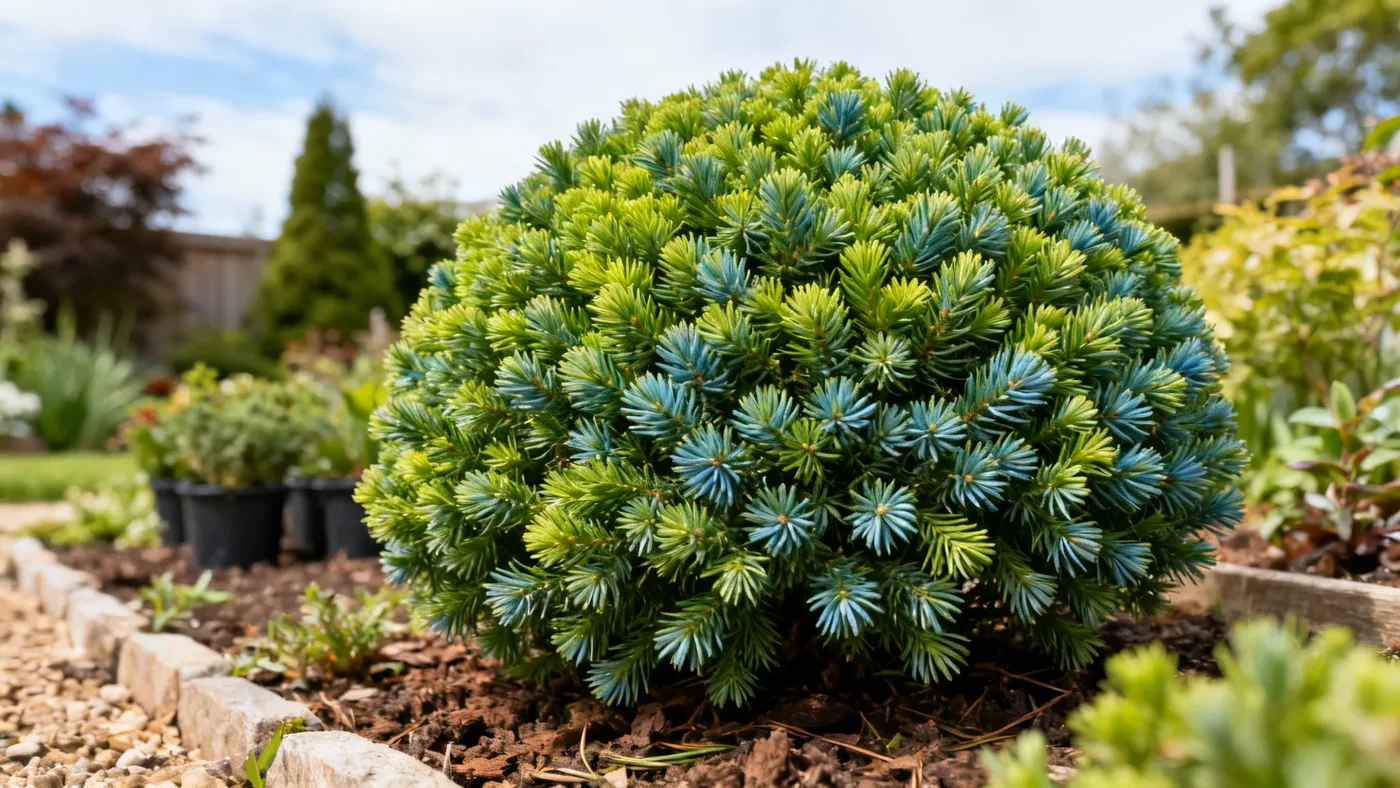
Is Dwarf Japanese Cedar Deer and Rabbit Resistant?
Homeowners and landscapers in areas with active deer and rabbit populations often ask whether Dwarf Japanese Cedar will survive browsing pressure. The short answer is yes, but with an important caveat: the plant is good, not perfect, at resisting these animals. This guide addresses your specific questions about wildlife resistance and practical ways to protect your investment.
Deer Resistance Fundamentals
Is Dwarf Japanese Cedar truly deer resistant?
Yes, Dwarf Japanese Cedar has good deer resistance because its resinous, awl-shaped foliage is unpalatable to most deer. The plant's soft needles in dense whorled sprays give it a texture that deer browse slowly, if at all. In typical residential settings with moderate deer populations, the plant rarely suffers noticeable damage from browsing.
Is Dwarf Japanese Cedar deer proof?
No plant is truly deer proof, and Dwarf Japanese Cedar is no exception. In high-pressure areas where deer populations are very dense or food is extremely scarce, deer may nibble the outer foliage despite the plant's resistance. If your property sees daily deer herds or has a known overabundance problem, consider additional protection like fencing or repellents.
What makes Dwarf Japanese Cedar resistant to deer?
The plant's resinous, cedar-scented needles discourage browsing. Unlike tender deciduous shrubs such as yews or young fruit trees, the fibrous texture and mild resinous flavor make Dwarf Japanese Cedar a low-preference food source. Deer in your neighborhood have access to many more palatable options, so they typically skip this conifer.
Do deer eat Dwarf Japanese Cedar?
Deer rarely eat Dwarf Japanese Cedar in normal browsing patterns. Occasional light damage may appear in late winter or early spring when other browse is scarce, but it is usually minor. Heavy defoliation suggests either exceptional browsing pressure or an unusual local deer population behavior.
Will my Dwarf Japanese Cedar suffer more damage as a young plant?
Established plants are more resistant than newly planted saplings, simply because a small young plant is more accessible at browse height and the concentrated resin is less developed. When you plant a new Dwarf Japanese Cedar, consider a temporary tree guard if your area has heavy deer pressure, and remove it after the plant reaches 2 feet tall and establishes stronger branching.
Rabbit Resistance and Browsing Damage
Is Dwarf Japanese Cedar rabbit resistant?
Yes, rabbits also dislike the resinous foliage. Rabbits typically target herbaceous plants, clover, and tender bark rather than conifers with aromatic needles. Damage from rabbit browsing on Dwarf Japanese Cedar is extremely rare and usually occurs only when rabbit populations spike and preferred food is depleted.
Will rabbits eat Dwarf Japanese Cedar bark or stems?
Rabbits occasionally strip bark from young trees during winter in high-population years, but they target softer species like fruit trees and aspens first. The rough, resinous bark of Dwarf Japanese Cedar makes it an unattractive choice. Damage is unlikely unless you live in an area with exceptionally high rabbit density.
Are rabbits or deer more likely to damage my plant?
Deer are the more significant concern in most landscapes, both because populations are often higher and because a single deer can browse a wide area. Rabbit damage, when it occurs, is usually confined to the base or lower stems. Most gardeners in moderate wildlife pressure areas never observe rabbit browsing on this plant.
How do I distinguish rabbit damage from deer damage on Dwarf Japanese Cedar?
Deer browsing typically removes entire branch tips cleanly at an angle, often at a height of 3 to 6 feet depending on snow depth. Rabbit damage appears as gnawed or stripped bark near the base and lower stems, usually below 2 feet. Rabbit tracks (small hopping prints) and droppings are visible nearby.
Wildlife Pressure and Local Conditions
What exactly is a "high-pressure" deer area?
High-pressure zones are locations with dense or overabundant deer populations, typically found near suburban edges, nature preserves, or regions where hunting is restricted. If you regularly see multiple deer in your yard each week, your property qualifies. Contact your local extension service or wildlife agency to assess your area's deer population status.
Should I plant Dwarf Japanese Cedar if I live in a high-deer area?
Yes, but with realistic expectations. Even in high-pressure areas, Dwarf Japanese Cedar remains a preferred choice because it outperforms many ornamental shrubs. If your property has active deer daily, pair it with additional protection such as an 8-foot perimeter fence, repellent sprays applied in late fall, or a diverse planting strategy that includes multiple resistant species so deer do not over-browse any single plant.
Can repellents help protect my Dwarf Japanese Cedar?
Repellents can provide supplemental protection but work best as part of a layered strategy rather than a standalone solution. Deer habitually browse despite repellent taste or smell if the plant is their primary available food source. Apply repellents in fall before browsing season peaks, rotate between different active ingredients (such as capsaicin or egg-based products) to prevent habituation, and reapply after rain.
Will my Dwarf Japanese Cedar attract other wildlife?
The plant offers dense evergreen shelter for small birds and provides winter cover, but it does not attract bears, raccoons, or other large mammals. Its foliage does not produce berries or nuts, so it won't draw wildlife seeking food in that way. The plant is not known to be toxic to pets or people, so it is safe for yards where animals may brush against it.
Practical Protection and Planting Strategies
What fencing height do I need to protect Dwarf Japanese Cedar from deer?
An 8-foot perimeter fence is standard for excluding deer from ornamental plantings. If a full fence is not feasible, consider a 5-foot fence close to the plant itself (within 3 feet) combined with repellents and diverse plantings. Deer can jump over low barriers, so a minimum 5 feet is recommended if you install a partial fence.
What companion plants pair well with Dwarf Japanese Cedar for deer resistance?
Good companions include Japanese maple, azalea, hosta, fern, and other acid-loving shade plants that also resist deer. Adding visual and textural variety makes your garden less attractive to browsing animals because a monoculture is easier to exploit. Space plants according to their mature size (typically 4 to 6 feet apart for Dwarf Japanese Cedar) and refer to our care guide for full cultivation details.
Does plant spacing affect resistance to deer or rabbits?
Spacing itself does not change the plant's chemical resistance, but proper spacing improves overall plant health, which strengthens its ability to recover from any light browsing. Dense plantings can also make it harder for deer to access individual plants within the grouping. Follow standard spacing of 4 to 6 feet apart for landscape effect.
Should I install a tree guard on a young Dwarf Japanese Cedar?
A tree guard (a cylinder of plastic or wire mesh around the base) is worth installing if your area has heavy rabbit populations or if you observed bark stripping on other trees during the previous winter. Remove the guard once the plant reaches 2 feet tall and the bark has thickened, usually within 2 to 3 growing seasons. Remove it annually to inspect for girdling.
Growing Strong Plants for Best Resistance
Do mature plants resist browsing better than young plants?
Yes, a fully established plant with thick stems and developed resin reserves is more resilient. An 8-year-old specimen with a 4-foot mound is less likely to show visible damage than a 1-year-old sapling. If browsing does occur, a strong plant recovers quickly. Consistent watering, proper soil conditions, and balanced fertilizing during establishment help your plant reach maturity faster.
Does the cultivar matter for deer and rabbit resistance?
All named dwarf globe forms of Cryptomeria japonica (including 'Globosa Nana,' 'Tansu,' 'Vilmoriniana,' and others) share the same resinous foliage that deters browsing. Cultivar choice should be based on desired mature size, foliage color (especially winter bronzing), and hardiness in your USDA zone (5 through 9 for most). Resistance does not vary meaningfully among cultivars.
How do I encourage the healthiest growth for natural pest and browsing resistance?
Plant in moist, humus-rich, well-drained soil with a soil pH between 5.0 and 6.5. Provide full sun to part shade, with afternoon shade in hot or dry climates to reduce foliage scorch. Water consistently during the first two growing seasons while the root system establishes. A light annual feeding in early spring with a balanced or acid-formulated fertilizer supports vigorous growth without over-stimulating soft new shoots.
What should I do if my Dwarf Japanese Cedar shows winter damage or browning?
Winter bronzing (a natural bronze-purple foliage cast in cold months) is normal and not a sign of disease or damage. True damage from drought, waterlogging, or severe wind appears as brown sections that do not green back up by late spring. Refer to the care guide for diagnosis and recovery steps.
Quick Reference: Dwarf Japanese Cedar Resistance at a Glance
| Factor | Details |
|---|---|
| Deer resistance rating | Good (low-preference browse due to resinous foliage) |
| Deer proof? | No (not deer proof in high-pressure areas) |
| Rabbit resistance rating | Good (rarely browsed; bark stripping is uncommon) |
| Young plant vulnerability | Moderate (use tree guards in high-pressure zones for first 2-3 years) |
| Best protection strategy | Combination of strong plant health, diverse companion plantings, and repellents or fencing in high-pressure areas |
| USDA hardiness zones | 5 to 9 |
| Mature size | 3 to 6 feet tall, 4 to 6 feet wide (slow growth rate, roughly 3 to 6 inches per year) |
| Spacing for group plantings | 4 to 6 feet apart |
| Toxic to pets or people? | No (safe for yards with children and animals) |
| Best soil pH range | Acidic, 5.0 to 6.5 |