Is Dwarf Japanese Cedar Toxic to Pets and People?
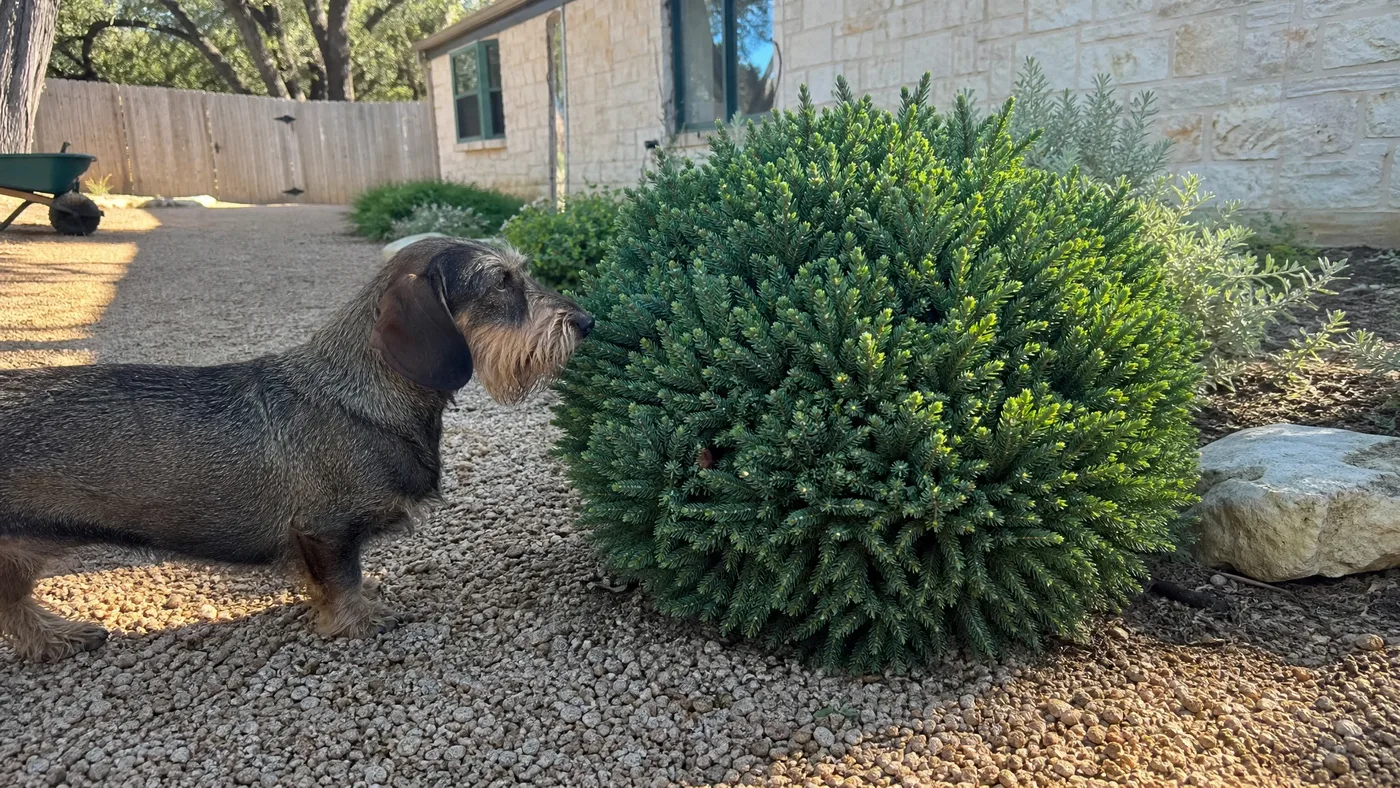
Crush a few needles of Dwarf Japanese Cedar between your fingers and you get a fresh, resinous smell that makes you want to do it again. Then the second thought arrives, usually when the dog is sniffing at the same shrub: can anything that smells this good be dangerous to pets or people?
It is a fair worry, because plenty of garden plants are harmful and most evergreens look alike to a curious puppy. We'll walk you through what the sources say about this cultivar, where pollen and pet behavior fit in, and what to do if an animal does chew a branch, then how to place the plant so everyone in the household shares the yard comfortably.
Dwarf Japanese Cedar Is Not a Poison Plant, Right?
A customer once told us she had pulled out a perfectly healthy conifer because a neighbor said "all evergreens are poisonous." That belief is common and it is wrong as a blanket rule. Some conifers and many garden plants do carry real warnings, others do not, and the only honest way to judge one is to look at what has been written about that exact plant.
This cultivar has no significant problems, and it carries no toxicity statement at all. 'Globosa Nana' is simply a foliage shrub, and no poison warning comes attached to it.
What a Missing Warning Does and Does Not Mean
No warning is not a guarantee, and we would rather say so plainly. A plant profile written for gardeners is not a veterinary toxicology review. What we can say is that nothing we have read flags this shrub as dangerous, so we treat it as a low-worry plant while keeping common sense in place.
If you want a second opinion, ask your veterinarian or a poison-control service for your area. They can look up the botanical name, Cryptomeria japonica, and give you current guidance for your particular animal. Our Dwarf Japanese Cedar FAQ has a short answer to the same question if you want a quick version.
Check the Tag Before You Rely on Any Profile
Everything above applies to Cryptomeria japonica 'Globosa Nana'. The nursery trade sometimes sells unnamed dwarf globe forms under that same name, so a plant bought at a big-box store may not be the cultivar the profile describes. Look for the cultivar name on the tag, keep the tag, and give the full name to your vet if a question ever comes up.
Does Cedar Pollen Mean Trouble for Dwarf Japanese Cedar Owners?
The word "cedar" sets off alarm bells for anyone who has ever sneezed through a spring pollen season. Names are misleading here, so it helps to sort out who is who. True cedars belong to a different genus, Cedrus. Dwarf Japanese Cedar is Cryptomeria japonica, and 'Globosa Nana' belongs to the cypress family, Cupressaceae, despite the common name.
A Small Dome, Not a Giant Tree
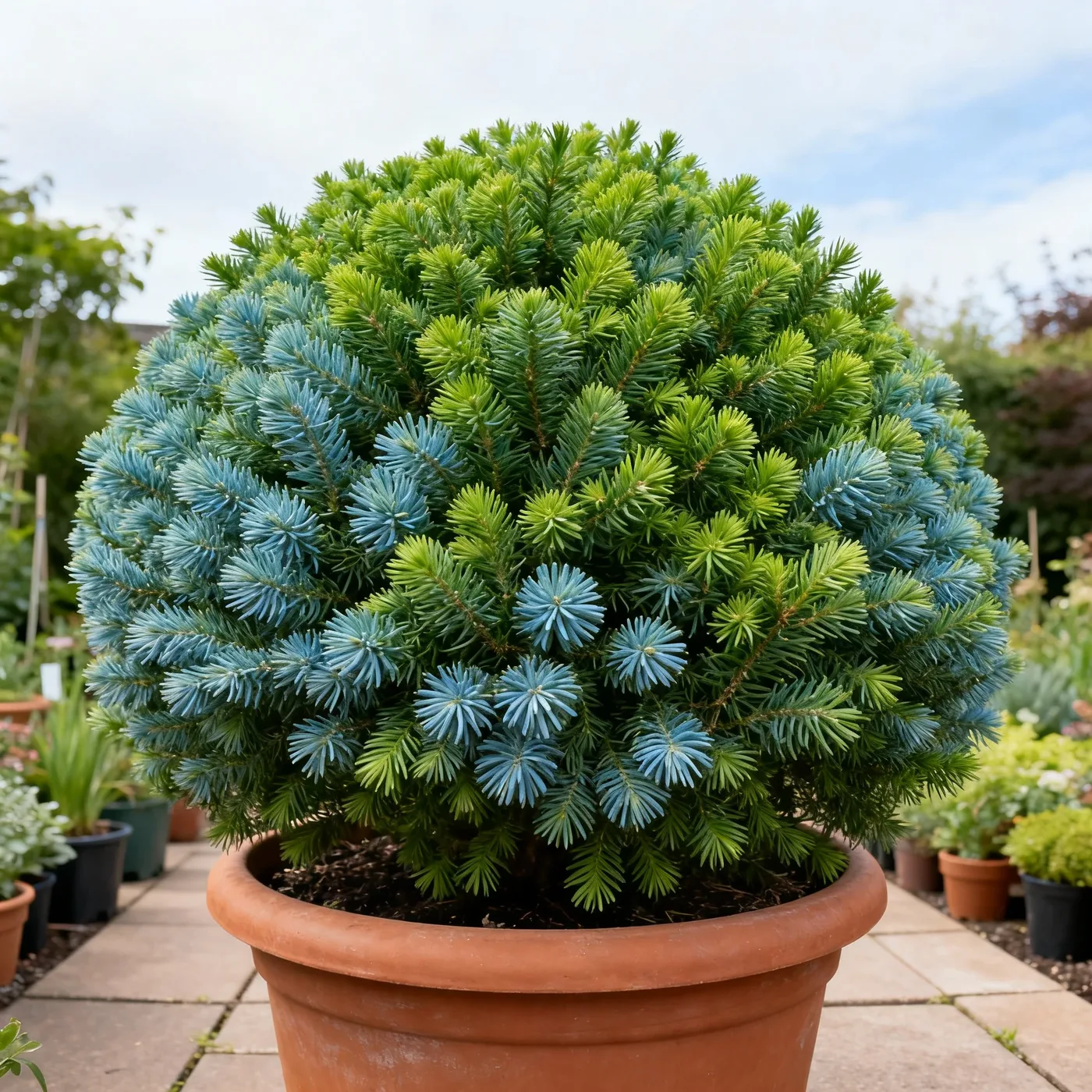
The species is a very large tree, 50 to 70 feet tall. Our cultivar is a different animal altogether, a slow-growing dome that reaches 2 to 4 feet tall and 3 to 4 feet wide. It is grown for its foliage, with bluish-green needles that turn rusty-red in winter, not for flowers or any show of cones.
That difference in scale is worth holding onto if someone tells you a neighbor's towering Japanese cedar made their whole street sneeze. A three-foot shrub in a border is not the same plant in any practical sense, though we cannot cite a source that measures its pollen.
Allergies Are a Question for Your Doctor
Whether a particular person reacts to pollen from any conifer is a medical question, and the horticultural sources do not address it. If you or a family member has a known pollen allergy, we suggest asking your doctor before planting, and noticing how you feel when you handle or trim the shrub. The good news is that a compact plant with a naturally rounded habit needs no maintenance to keep its form, so you will rarely have to touch it.
Pets Never Chew Evergreens Anyway
Ask anyone who has raised a young dog and you will hear the opposite. Puppies pick up sticks, carry off mulch and gnaw at low branches because they are bored, teething or simply curious. A rounded shrub at nose height beside a lawn is exactly what an adolescent dog or a cat in an exploring mood will test.
So we would not tell you to count on your pet's good taste. There is a bit of help in the plant's reputation: the cultivar is resistant to deer, and the species resists both deer and rabbits. That suggests wildlife tends to leave it alone, but resistance is not the same as pet-proof. Our guide on deer and rabbit resistance goes into what that does and does not mean.
Mild Stomach Upset Is the Realistic Worry
If an animal swallows a mouthful of any plant material it was not built to eat, a mild stomach upset is the most common outcome. Vomiting, drooling or a day of looking sorry for itself are the usual signs vets describe for plant chewing in general. We cannot cite a study for this particular shrub, and we will not invent one, but we also have no reason to expect more than that.
The practical step is the same either way: watch the animal, and call the vet if anything seems off or lasts. Persistent chewers are better managed with training and placement than by hoping a plant tastes bad.
Awl-Shaped Needles and Mouths
The needles are awl-shaped, which means narrow and pointed rather than soft and flat like a fir's. A dog that mouths a branch tip can get a scratch or a stray needle stuck to its lip or gum, and that is a physical nuisance, separate from any question of poison. If your pet paws at its face after a visit to the shrub, a gentle look in the mouth is sensible, and the vet can help if something is lodged.
A Nibbled Dwarf Japanese Cedar Means an Emergency
You walk outside and find a branch tip chewed and a dog looking guilty. The panic reaction is to rush to the emergency clinic at once. We understand it, but a calm look at the evidence comes first: no source we have read lists this cultivar as poisonous, and the profile notes no significant problems, so a nibble does not point to an emergency by itself.
Calm does not mean careless. Dogs and cats vary, a small animal that eats a lot is a different case from one that mouths a twig, and a pet may also have swallowed something else in the yard. Your vet is the right person to decide, and a short phone call costs nothing.
What to Do If a Pet Reacts
Work through these steps in order, and keep them somewhere you will find them.
- Take any plant material out of the animal's mouth and move the pet away from the shrub.
- Note roughly how much was eaten, when it happened and what the pet weighs, so you can answer questions quickly.
- Call your veterinarian or a poison-control line and give the plant's botanical name, Cryptomeria japonica 'Globosa Nana', or bring the plant tag if you still have it.
- Watch for vomiting, repeated drooling, loss of appetite or unusual tiredness, and report any of these.
- Do not try to make the animal vomit unless a professional tells you to.
Go to the clinic without waiting if the animal is struggling to breathe, collapses or seems seriously unwell. Those signs call for a vet whatever the cause turns out to be.
Write the Numbers Down Before You Need Them
Most of the stress in these moments comes from hunting for a phone number while the dog watches you. Save your regular vet, the nearest emergency clinic and a poison-control line in your phone today, and put the same three numbers on the fridge. Add the plant tag or a photo of it to the same note. It takes five minutes and it turns a scary moment into a routine call.
Sap, Cones and Mulch Around the Plant
Gardeners tend to look at the shrub itself and forget what sits around it. A thick ring of mulch at the base, a scoop of fertilizer scattered over it and a pile of fallen needles in the fall make up most of what a dog actually digs through. We often see that ring of material draw far more interest from pets than the plant does.
Sap and Cones
The sources do not describe the sap or the cones of 'Globosa Nana' as a problem, and the cultivar is valued for foliage rather than for fruit or flowers. If you or a child get resin on your hands while handling branches, wash up afterward as you would after any garden job. People with sensitive skin may want gloves when planting or moving the shrub, mainly because sticky resin is a nuisance to remove.
Mulch and Fertilizer
Many fertilizers and some mulch products carry their own warnings, and those matter more than anything about the cedar. Read the label, keep granules off the surface by watering them in, and store bags where animals cannot reach them. The good news is that this shrub rarely needs feeding, which we explain in our fertilizing guide.
Sprays, Sick Branches and Strange Growths
The cultivar is generally pest-free, so you will seldom need to spray anything near it. That is good news for pets, because garden sprays are a bigger concern than the shrub.
Clemson notes that the species may have leaf blights or fungal diseases. If a branch browns or something unfamiliar appears around the base, keep pets away from it and ask your local extension service what it is.
Placing Dwarf Japanese Cedar Where Pets and Kids Roam
Picture the shrub beside a patio step, a paw-width away from a dog's favorite sunny spot. That is the kind of place where size and shape help you. At 2 to 4 feet tall and 3 to 4 feet wide, the plant stays low and tidy, and it works well in containers and bordering patios, lawns and walkways. Clemson adds that dwarf cultivars have dense, rounded growth habits and suit foundations, low borders and specimens.
Choosing the Spot
A bed tucked against a wall or fence, set back from the main running path, protects the plant from both wind and a happy sprint. For a household with animals and children, we suggest a few simple placements:
- Plant it just back from the main running path of a dog, so a fast turn does not flatten a branch.
- Put it in a pot on a step or a raised bed if you have a chewer, and see our guide to growing it in containers.
- Pair it with other low-worry plants and check each one's safety separately, since a pet-friendly shrub can sit next to a risky one. Our list of landscape uses and companions is a good place to start.
Teaching Kids to Look, Not Taste
The rusty-red winter color is a bonus here: children notice it, and it gives them a reason to look at a plant instead of picking at it. We treat this like any garden plant with small children around. Tell them it is for looking at, that needles stay on the shrub and that hands get washed after gardening. Because the plant stays under four feet, you can always see it from the patio, which makes supervision easy.
Settled Facts for a Pet-Friendly Dwarf Japanese Cedar Garden
Looking back across the beliefs, "all conifers are poisonous" did not hold up, because no source we read lists this cultivar as poisonous. The pollen worry mixes up true cedars with a cypress-family shrub, though a personal allergy is still a question for your doctor.
"Pets never chew evergreens" did not hold up either, and a nibble is more likely to cause mild stomach upset than anything dramatic. The idea that a nibble means an emergency also softened once we looked at the evidence, although we cannot cite a study.
Dwarf Japanese Cedar
Nursery-grown Dwarf Japanese Cedar in sizes from 1 Gallon, shipped to your door.
From $39.97
Shop Now →Because this guide is about keeping a cedar around pets and family, it matters to us that Dwarf Japanese Cedar thrives in the conditions we give it on our farms, which are full sun to light shade and moist, well-drained beds. We only ship plants we would plant ourselves, and every tree and shrub we send is top quality. When you are ready to bring one home, see the plants we have ready.