Is Mushroom Dwarf Japanese Cedar the Same Plant?
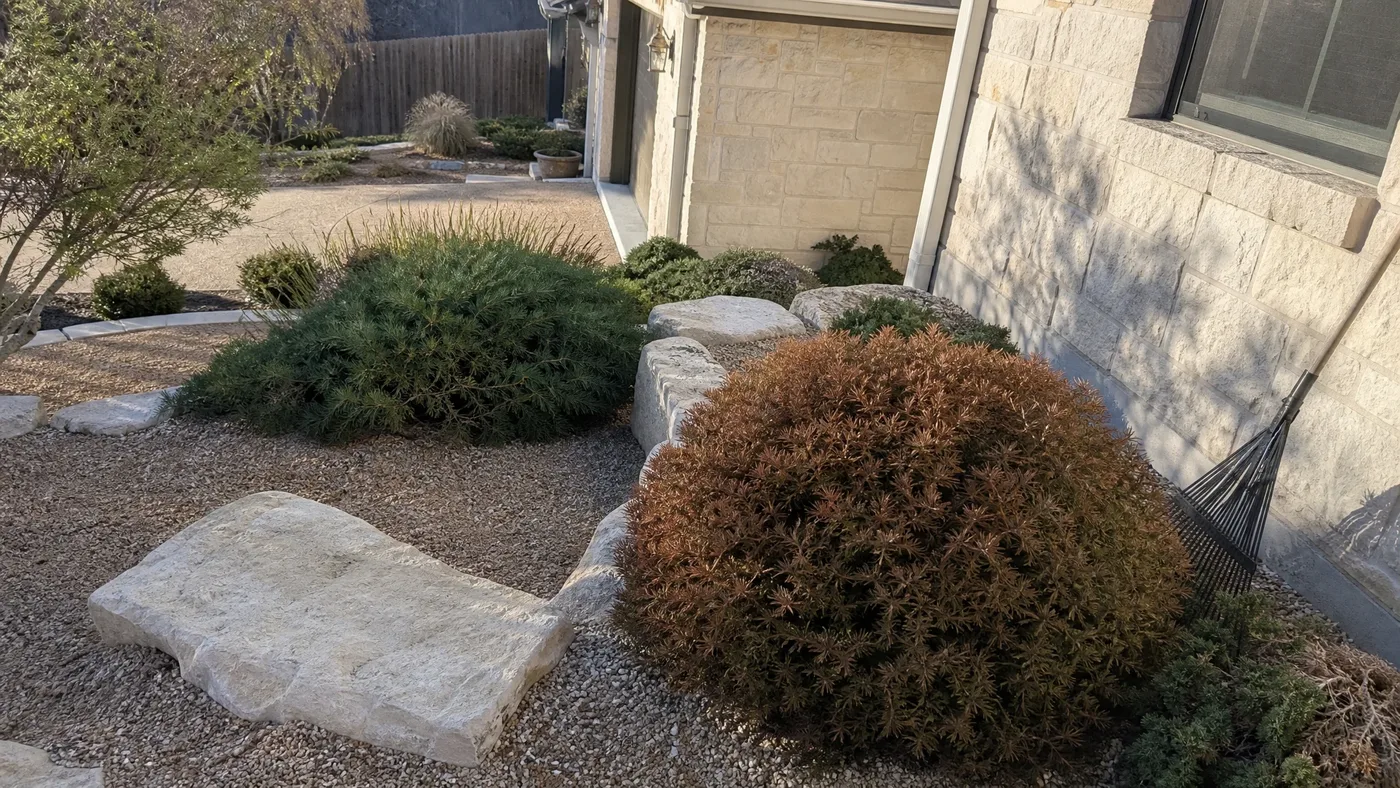
Stand at the top of a sloping front yard on a Saturday morning with a coffee in your hand and look down. Every low evergreen below you is a lumpy shape against the grass, and from up there a mound under two feet and a globe near four feet can pass for close cousins.
They are different plants with different jobs. Put the wrong one in the wrong place and the bed that looked tidy in spring crowds a walkway by year five, or leaves a gap you meant to fill. Put the right one in and you get a dense evergreen shape that holds its form through winter with almost no shearing.
Read on for how to place these shapes in a bed, how to tell Mushroom from Globosa Nana by eye, what the foliage and crown show up close, and what the roots underneath expect from you.
Picture the Whole Garden Before the Plant
Low evergreens do a job that nothing else in a yard does. Perennials die back to stubs and deciduous shrubs go bare in January, so a slope that looks full in July can read as bare soil by Christmas. A dwarf conifer keeps its volume all year. That is why what we tell customers is to place the low evergreens first, then fill the seasonal color around them.
Scale is the next thing to settle. The species, Cryptomeria japonica, is a forest tree of 50 to 70 feet, so the word cedar on a tag says nothing about what you are buying. The cultivar 'Globosa Nana' is a different story, and it stays at 2 to 4 feet tall and 3 to 4 feet wide.
Why Slow Growth Helps Your Plan
Both plants are slow. Clemson Extension rates the species as slow to medium, and the cultivar grows slowly too. For you, that means the shape you plant is close to the shape you will live with for years. A bed you sketch this fall will still roughly match the bed five springs from now.
What the Slope Adds
On a slope, shapes are read from below, so you see the side of each plant before you see its top. That is the view the later sections teach you to judge. Slopes also shed water quickly, which suits a plant that dislikes waterlogging, but the upper edge of the bed will dry first. Plan your watering for the high side.
Where Dwarf Japanese Cedar Sits in the Landscape
In a border, these dwarf cedars belong in the front or the middle, never the back. Their job is to hold a firm outline while taller shrubs and perennials move behind them. The cultivar does well in full sun to partial shade, so a corner that gets afternoon shade from a taller neighbor is fine. When you have a choice, we would still pick the sunnier spot.
Placing It Against Its Neighbors
Use the globe as an accent: one plant at the corner of a path, or a single anchor beside steps, where its 3 to 4 foot spread has room. Use the lower Mushroom in repeats along an edge or across a slope face, where a run of low shapes reads as one mass. Mixing the two in a small bed muddies both, because the eye cannot tell whether the repeat was intended.
Our guide to landscape uses and companion plants shows what to pair them with. Deer are rarely a worry, since the cultivar resists them, so a front-yard bed facing the street is a reasonable home.
Where Not to Put It
Skip the exposed corner. Mushroom requires a sheltered site and dislikes salt-laden winds, and Globosa Nana wants a sheltered position too. NC State, by contrast, lists Globosa Nana as resistant to salt. Where sources disagree, we take the cautious read. If a plant would catch road spray or hard wind, shelter it behind something or choose another site.
Drainage is the other limit. A low spot where water sits after rain is wrong for either one, however good the light is.
Rounded Dome or Flat Pad on the Bench
To answer the title directly: no, Mushroom and Globosa Nana are not the same plant, even though both get sold loosely as dwarf Japanese cedar. They are separate cultivars of Cryptomeria japonica with different mature sizes. The trade also sells unnamed dwarf globe forms under the generic Globosa Nana name, so a tag that only says dwarf Japanese cedar tells you very little.
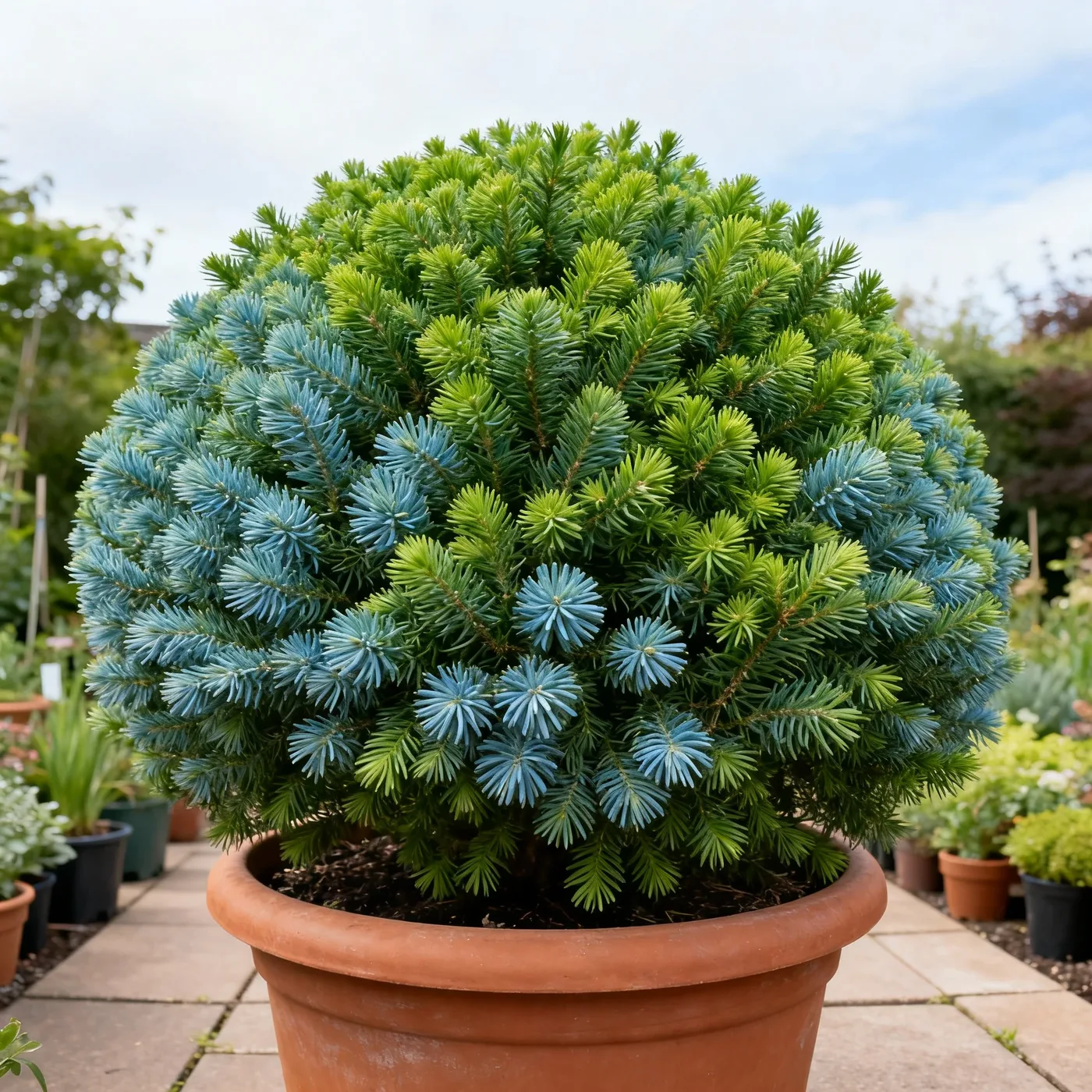
Mushroom is a dwarf conifer reaching about 20 inches in 10 years, with a rounded habit forming a dome of dense foliage. Globosa Nana is a dense, dome-shaped plant with awl-shaped leaves.
What the Pad Description Means
You will hear Mushroom called a flat pad or a ground-hugging mound. It forms a dome, so we would not promise a table-flat top. What holds up is the proportion. Mushroom stays low, under about 2 feet for its first decade, while the globe keeps climbing toward its 2 to 4 feet.
This table compares the two on the figures our sources give.
| Trait | Mushroom | Globosa Nana |
|---|---|---|
| Habit | Rounded dome of dense foliage | Dense dome with awl-shaped leaves |
| Size | About 20 inches after 10 years | 2 to 4 feet tall, 3 to 4 feet wide |
| Hardiness zones | Not in our sources, so check the tag | 6a to 9b |
| Winter color | Check on the plant in front of you | Bluish-green needles turn rusty-red |
Reading the Dwarf Japanese Cedar Shape From the Side
Looking down at a plant from standing height flatters every shape, because from above everything is a green circle. Get low, with your eyes at the level of the plant's middle, and the silhouette tells you what you have. This is how we check plants in our rows, and it works as well on a bench at the garden center as it does in your own bed.
Three Things to Look For
First, compare height to width. A plant clearly wider than it is tall is behaving like a low mound. One whose height and width are close is behaving like a globe. Second, find the widest point. On a dome it sits well below the top, and the sides curve in above it.
Third, check the top line. Does it rise to a gentle peak, or run nearly level from shoulder to shoulder? None of these is a lab test, and one glance will not settle every plant. When the shape and the tag disagree, trust the tag's cultivar name and watch it for a season.
Pot Shape Can Mislead
A young plant in a container is not yet showing adult proportions. Roots fill the pot, branches lean toward the light, and a plant that has been turned or crowded on a bench can look lopsided. Judge the shoots, not the pot. Rotate a leaning plant toward the light and look again. Our cultivar comparison lays out more of the look-alikes.
How Mushroom Dwarf Japanese Cedar Fills Its Space
The pace is what makes Mushroom useful as a low cover. At about 20 inches in 10 years, that works out to an average of roughly 2 inches a year. Growth is rarely even, so a young plant may do less in its first seasons and more once its roots settle. Expect it to read wider than tall long before it reads big at all.
What Year Five Looks Like
If growth were perfectly even, a five-year-old Mushroom would stand about 10 inches tall. Treat that as a rough guess, because our sources give no yearly figure. What you can count on is that a bed of them looks sparse at planting and knits together slowly. Set them at the spacing on the tag and use mulch, not extra plants, to cover the gaps.
Spreading Without Stacking
Branches that reach outward do not pile one layer on another, so the plant gains width at its edge while the center stays dense. On a slope, the result is a low, continuous mound that follows the grade. Globosa Nana's naturally rounded habit needs no maintenance to keep its form, and we expect the same of Mushroom.
Common advice says to shear dwarf conifers into shape every year. We would not. Shearing a plant that already holds a clean outline only swaps its natural edge for a cut one. If you do need to trim, our guide on how and when to prune covers the light touch.
Close Up on Dwarf Japanese Cedar Foliage and Crown
Up close, the foliage is what separates this plant from other low evergreens. Globosa Nana's leaves are awl-shaped, meaning short and tapering to a point, and closely appressed to the shoots, meaning pressed against the stem instead of standing away from it. That gives the surface a tight, dense look that you can see and feel at arm's length.
Winter Color Is Normal
Globosa Nana's bluish-green needles become rusty-red in winter, and the color shifts with season and light. A rusty winter cast on a firm, healthy plant is the normal cycle. Our guide to a dwarf Japanese cedar turning brown helps you tell that from real damage.
Judging the Crown
The crown is the top surface of the plant. A healthy one is dense, with shoots touching their neighbors and no gaps showing bare stems. Clemson says the species is typically insect-free but may have leaf blights or fungal diseases. Patches of brown shoots in an otherwise firm crown, especially after a wet spell, deserve a closer look.
Before you plant, lift the outer branches gently and look inside. A dense crown dries slowly after rain, so that is where trouble would show first. Needles near the center should look alive, not dry and brittle.
What a Mushroom Dwarf Japanese Cedar Tells Your Roots
A low, dense dome changes the soil under it. It shades the ground and sheds rain toward its outer edge, called the drip line, the circle on the ground beneath the outermost branch tips. Soil under the crown stays cooler and dries more slowly than open ground nearby. That helps in a hot summer and hurts in a wet one, since Mushroom dislikes waterlogging.
So start with soil that drains. Mushroom tolerates most soils but prefers a humus-rich, moist, well-drained one in full sun or partial shade. Globosa Nana accepts any texture and pH, though the species prefers acidic soil. If you do not know your pH, test it first. Our soil and drainage guide covers the details.
Watering a Plant With Mixed Reviews
On water, sources disagree. The cultivar resists drought and dry soil, while the Arkansas Extension says the species lacks drought tolerance. Our read is to keep new plantings steadily moist until established, then watch the plant. Check the soil a few inches down before watering, because a dense crown can hide dry ground, and apply water at the drip line.
The Crown Test for Telling Them Apart
Mushroom and Globosa Nana are separate cultivars with separate jobs. Mushroom is a low, slow cover reaching about 20 inches in a decade, and Globosa Nana is a 2 to 4 foot accent. Check the tag, then the silhouette from the side. Last, look at the crown: a top that sits low and nearly level with its shoulders is the pad, and a top that rises to a clear peak above its widest point is the dome.
Dwarf Japanese Cedar
Nursery-grown Dwarf Japanese Cedar in sizes from 1 Gallon, shipped to your door.
From $39.97
Shop Now →Mushroom and Globosa Nana both start life the same way here, in beds that catch plenty of sun with a little shade, stay evenly damp yet drain well, and sit out of the harshest wind. As a small grower-run business, we only ship top-quality plants we would plant ourselves. When you have worked out which shape belongs in your garden, see the Dwarf Japanese Cedars we have ready.